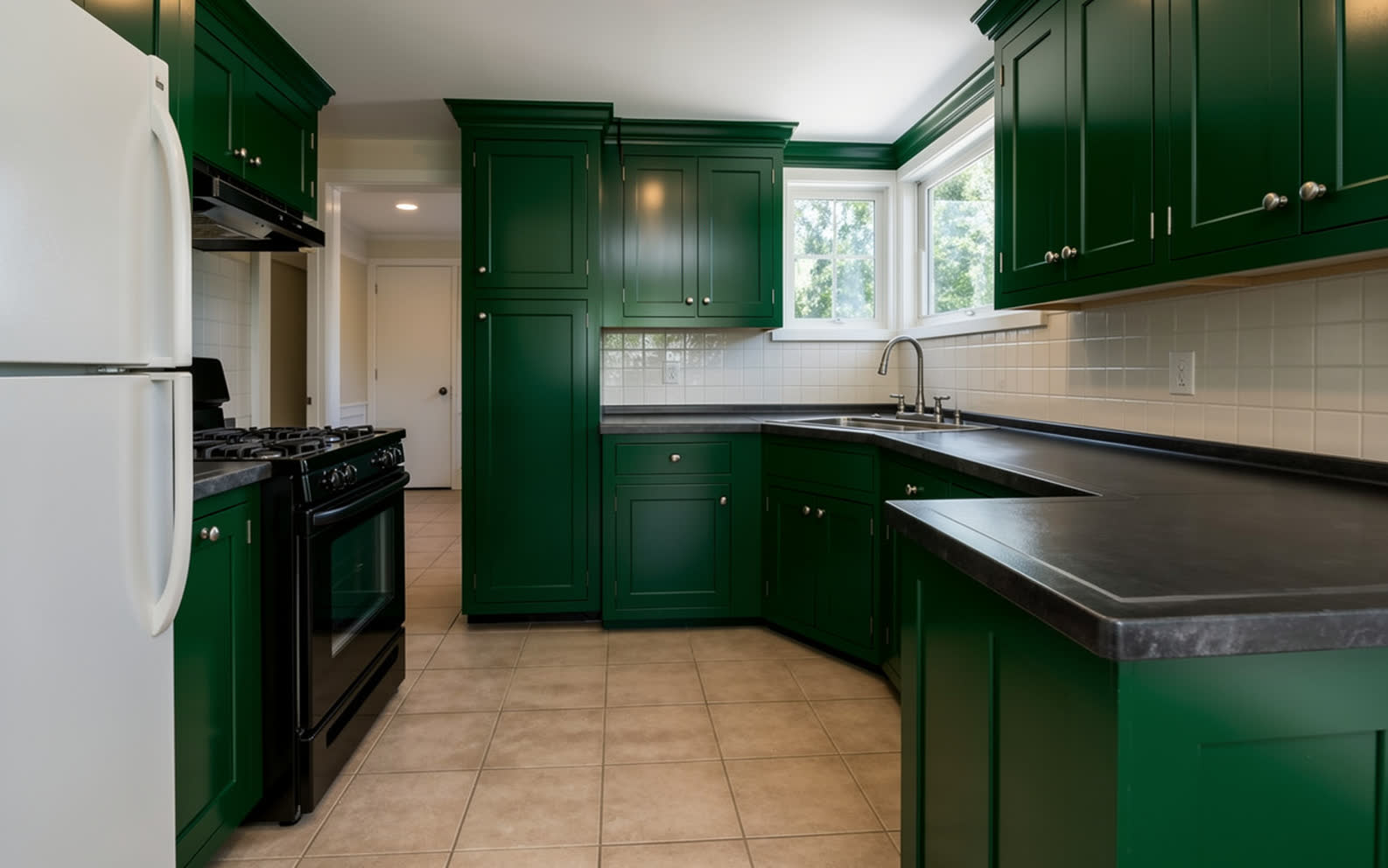
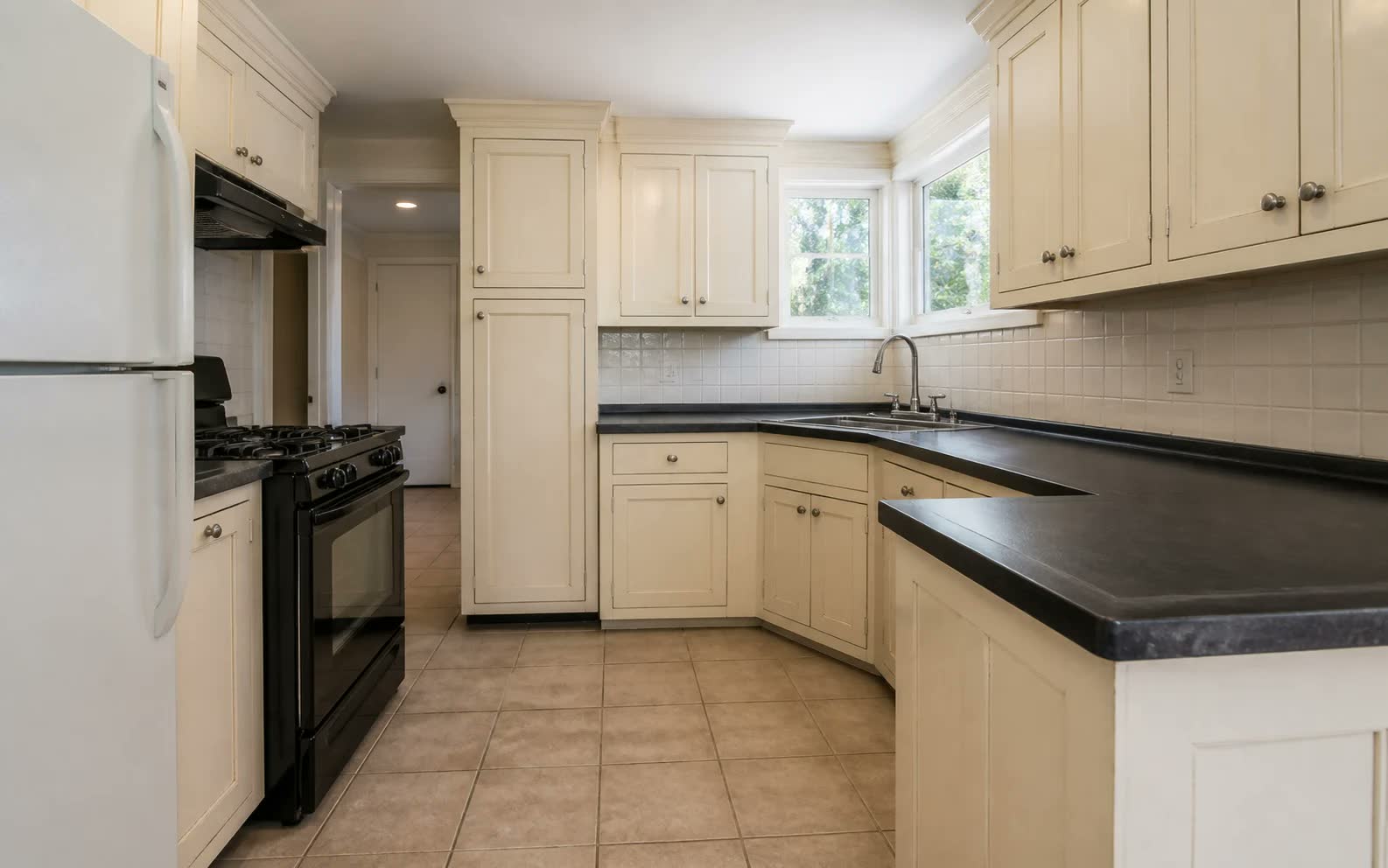
See the color on your own cabinets before you buy the paint
See paint colors on a real kitchen instead of on a paint chip. Every picture on this page is one room with a different color on the doors, and nothing else touched. To do it to your kitchen, upload a photo on the home page.
How it works on your own kitchen
Pick a color from the picker, or upload a photo of the paint sample you are holding.
Your cabinets change. Nothing else does.
Opens the tool on the home page. Bring one photo of your kitchen.
What this tool actually does
Cabinet Painter takes two images. The first is a photograph of your kitchen. The second is the color you are thinking about, either a color you pick on screen or a photo of the paint sample in your hand.
It repaints the cabinet doors, the drawer fronts and the visible cabinet sides in that exact color. It keeps the shape of every door, the panel lines, the gaps between doors, and the position of every handle.
It does not touch your countertops, your backsplash, your walls, your floor, your sink, your faucets, your appliances or your lighting. The paint is worked into the light that is already in your photo, so it looks like a photograph of painted cabinets and not a flat block of color dropped on top.
Why the small sample lies
You stand in a store and hold a small card of color against a white wall. It looks right. You buy the paint.
Then thirty doors are that color, in your room, under your lights, next to your countertop. And it is not the color you thought you bought.
This is the most repeated regret in kitchen forums. Someone picks what looks like a soft sage green on a small sample and ends up with something bright and lime colored that fights the gray countertops they already paid for. The color did not change. The size changed, and the light changed.
Two things are happening.
Size. A color covering thirty doors reads stronger than the same color on a card the size of your hand. Pale colors look paler. Strong colors look stronger. Gray samples that looked neutral suddenly show green, blue or purple underneath.
Light. Store lighting is nothing like kitchen lighting. Your room has one window in one place, your bulbs have one color temperature, and your countertop bounces its own color back onto the doors above it.
A small sample cannot show you either of those things. A photograph of your own kitchen can.
A major kitchen remodel costs $55,000 at the middle of the range. Painting cabinets costs a small fraction of that. But it is still a weekend of work, or a bill from a painter, and it is still something you do not want to do twice. 47% of homeowners who remodeled say they liked their home more before they did it.
How it works
1. Upload a photo of your kitchen. A phone photo is fine. Stand back far enough to get a full run of cabinets in the frame. Daylight helps.
2. Give it the color. Pick a color on screen, or take a photo of the paint sample you are holding and upload that. If you photograph a real sample, the tool matches that exact color and finish, which means you can test the specific shade from the specific brand you are considering.
3. Look at your own kitchen. Your room comes back with painted cabinets. Same layout, same window, same countertop, same handles. Try the next color. Most people try six or seven before they stop.
Choosing a cabinet color, and getting it right
Some things worth knowing before you commit, whether or not you use our tool.
Test the color against what is staying, not against a white wall. Your countertop, your floor and your backsplash are already chosen. They are the things the new color has to live with for the next fifteen years. Hold your sample against the countertop, at counter height, not up near the ceiling.
Look at it at three times of day. Morning light, afternoon light, and at night with your bulbs on. Most people only ever look at a sample once, in the store. A gray that looks calm at two in the afternoon can look cold and blue at seven in the evening.
Know what your bulbs are doing. Warm bulbs, the ones around 2700K, push everything towards yellow. They make white cabinets look creamy and can turn a cool green muddy. Neutral bulbs around 4000K are closer to daylight and show a color more honestly. If your kitchen has warm bulbs and you are choosing a cool gray, expect the two to argue.
Watch the undertone. Very few colors are pure. Most whites lean yellow, pink or blue. Most grays have green, blue or purple underneath. On a small sample the undertone is invisible. Across a whole kitchen it is the first thing you see, and it is what decides whether the cabinets and the floor look deliberate or accidental.
Darker on the bottom, lighter on top, if you are unsure. Dark base units with lighter wall units is a safe structure that works in most rooms and makes a small kitchen feel less heavy. Going dark on every cabinet in a room with one small window is the choice people most often regret.
Choose the finish as carefully as the color. Matte hides small dents in old doors but marks easily around handles and near the range. Satin and eggshell are what most painters use on kitchen cabinets, because they wipe clean and still look soft. High gloss shows every brush mark, every dent and every fingerprint, and on old doors it is unforgiving.
Paint a real sample before you buy twenty liters. Our tool tells you what a color looks like in your room. It does not tell you how the paint feels or how it holds up. Once you have narrowed six colors down to one on screen, buy a small pot of that one and paint a door.
If you are still deciding which direction to go, browse cabinet styles and colors first, then come back and try your shortlist on your own kitchen.
One room, six more answers
These are demonstration kitchens, not customer photos. Each starting room was generated, and every result below is the real Cabinet Painter output run on it, with nothing retouched afterwards.
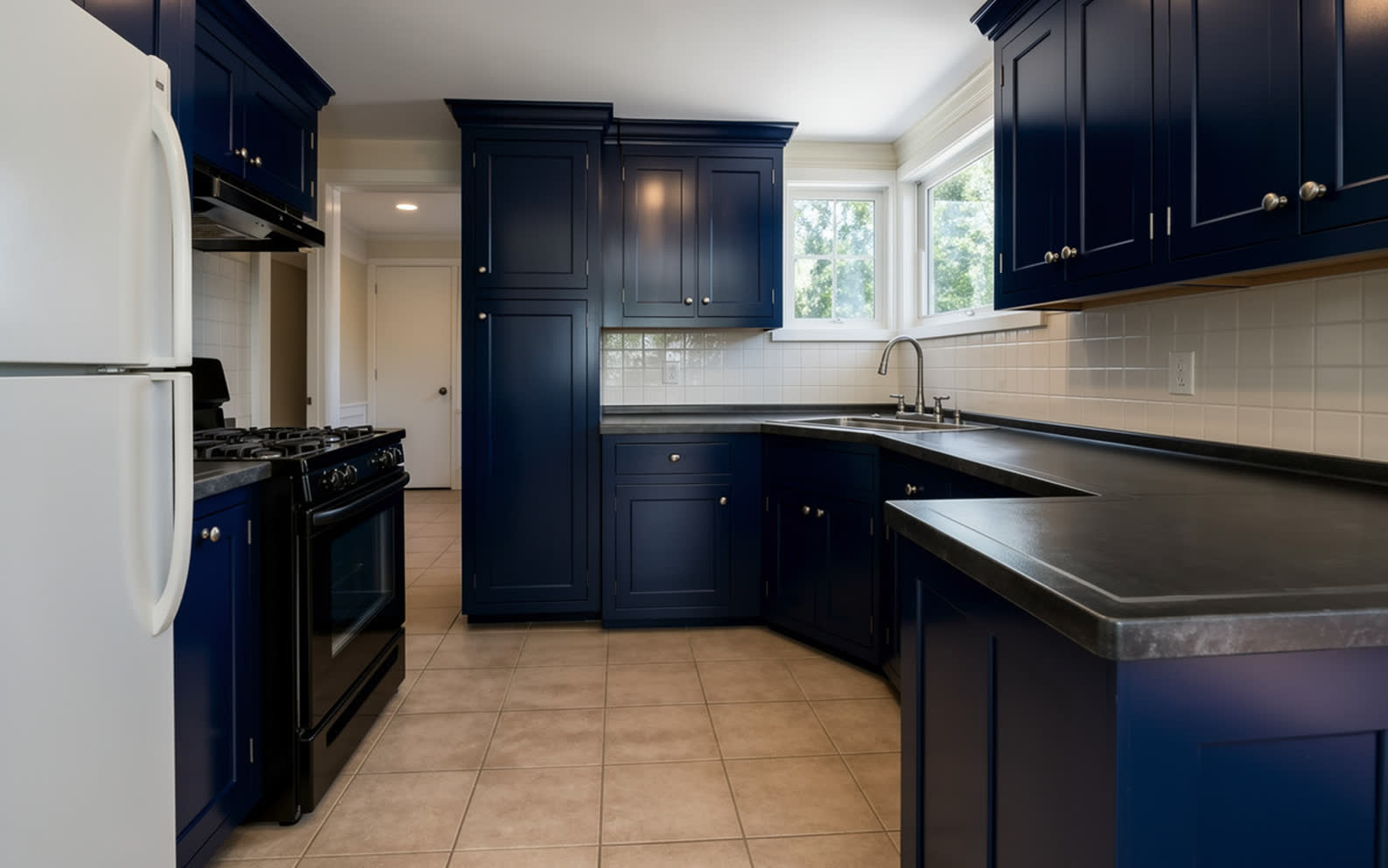
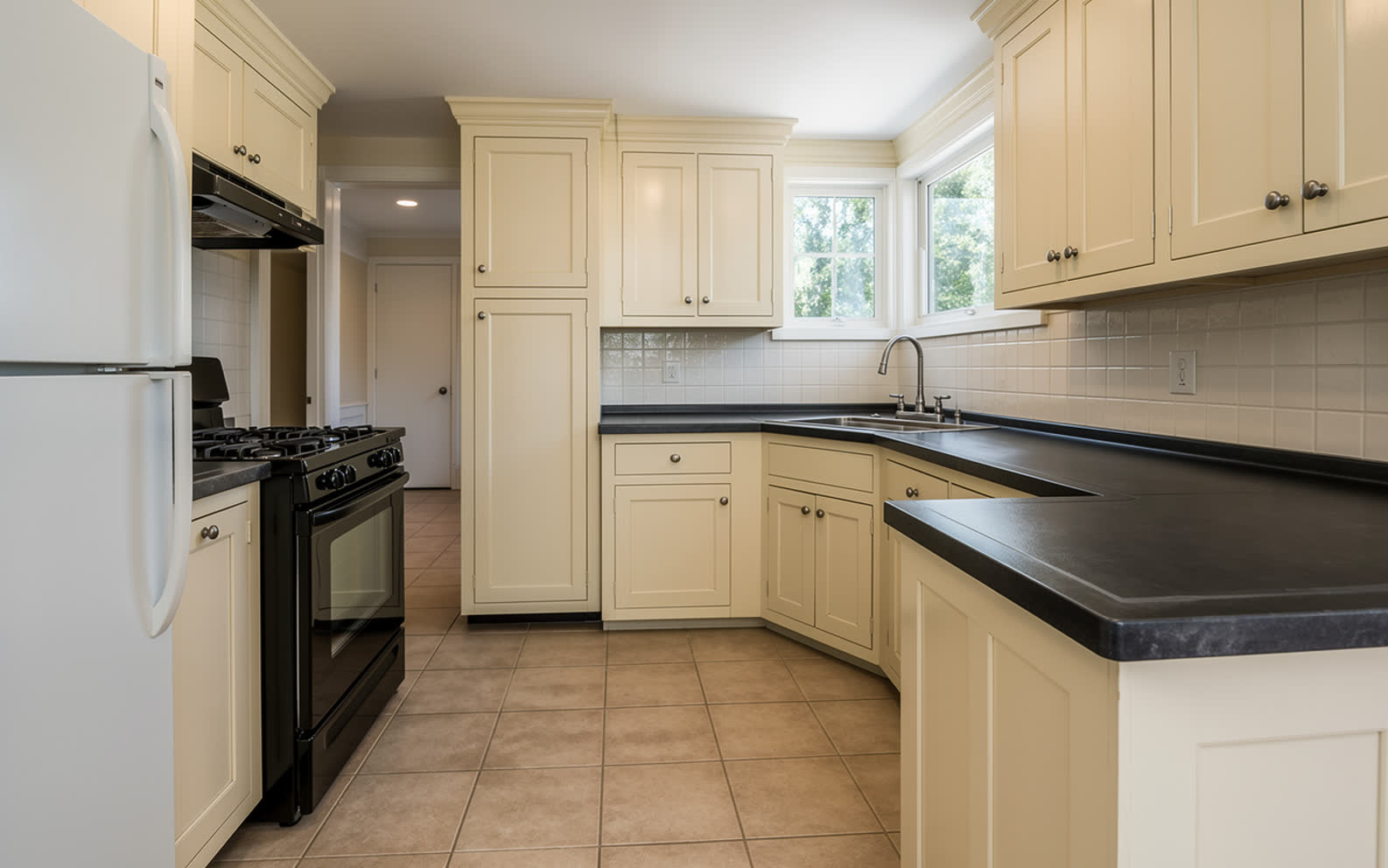
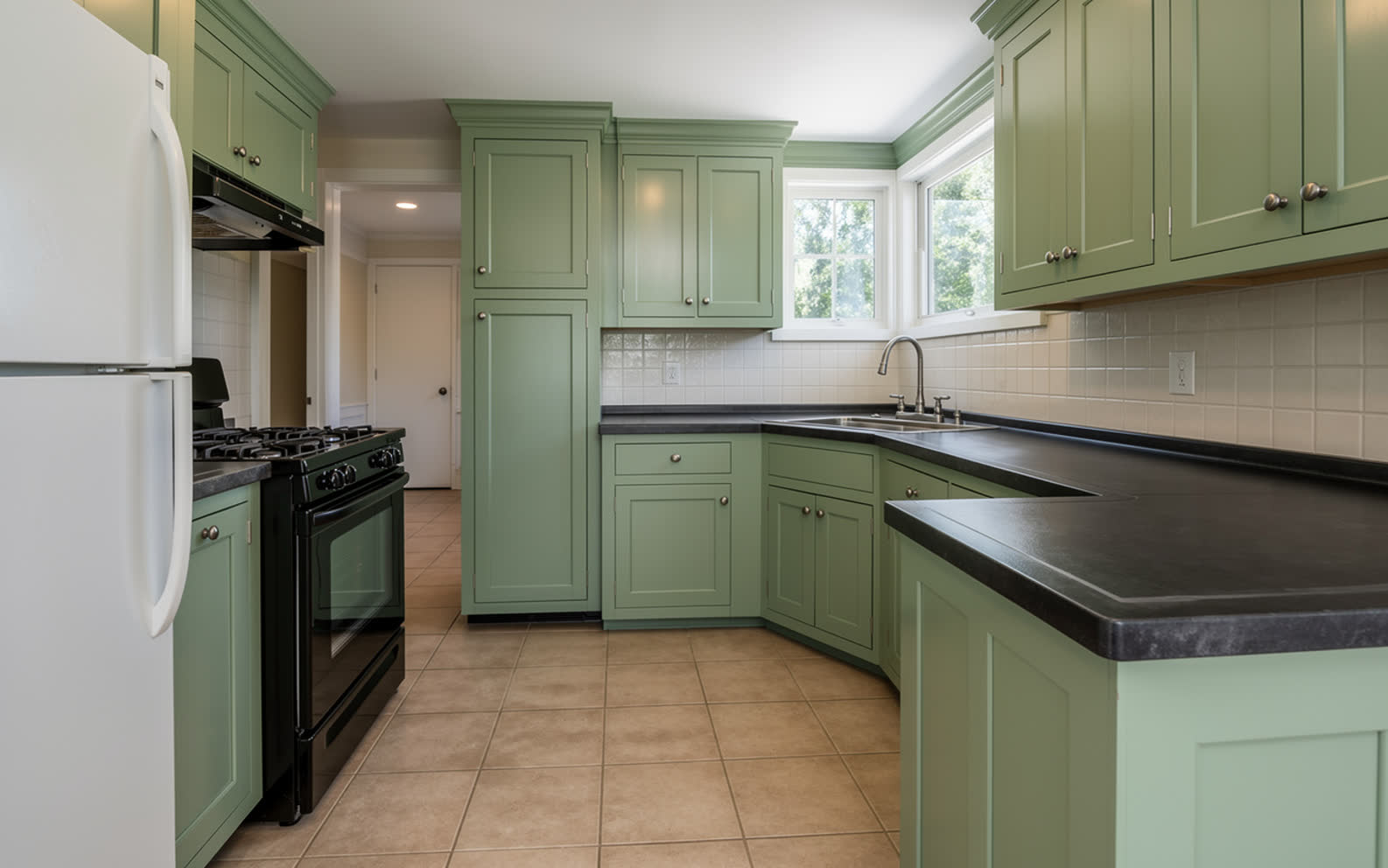
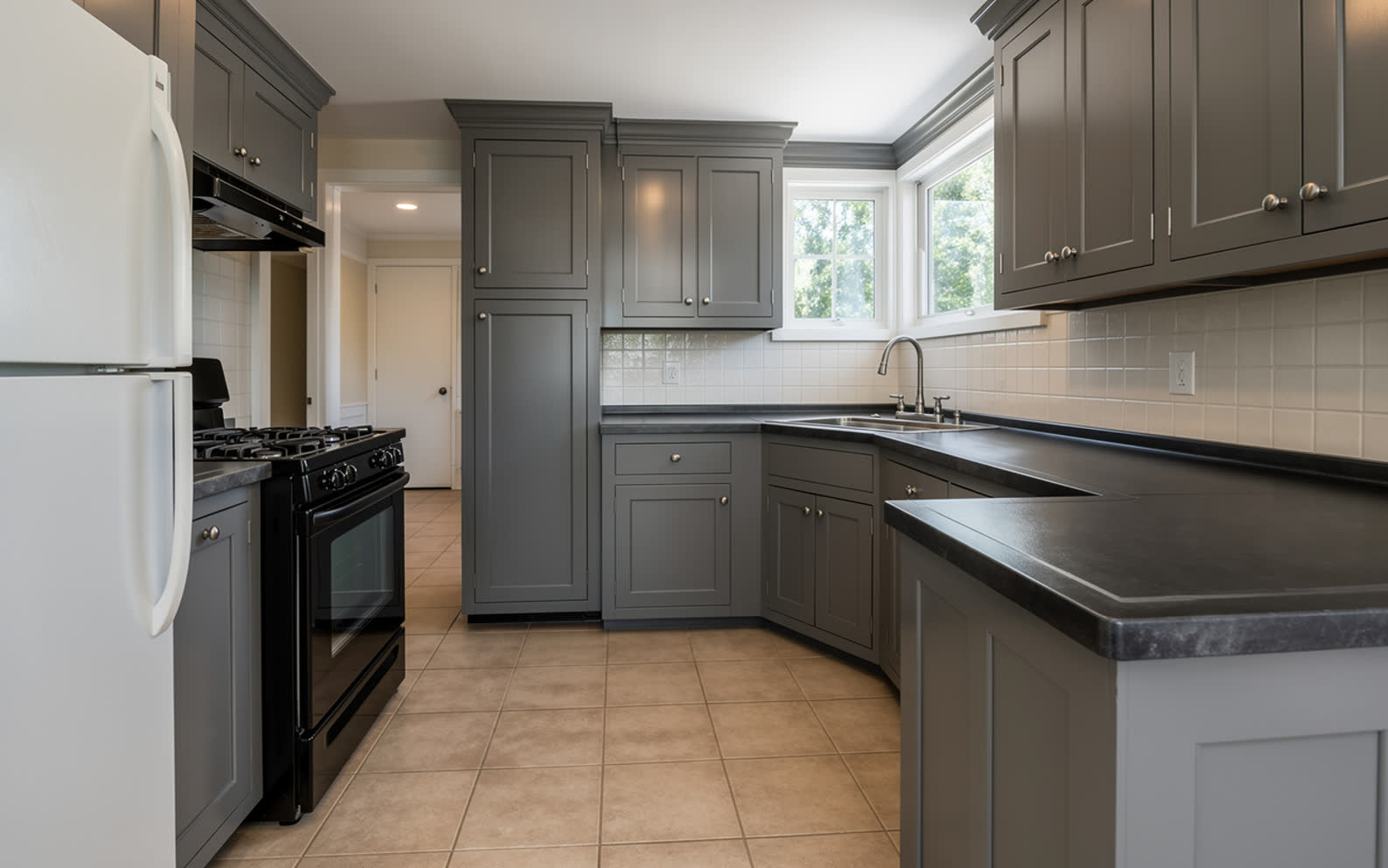
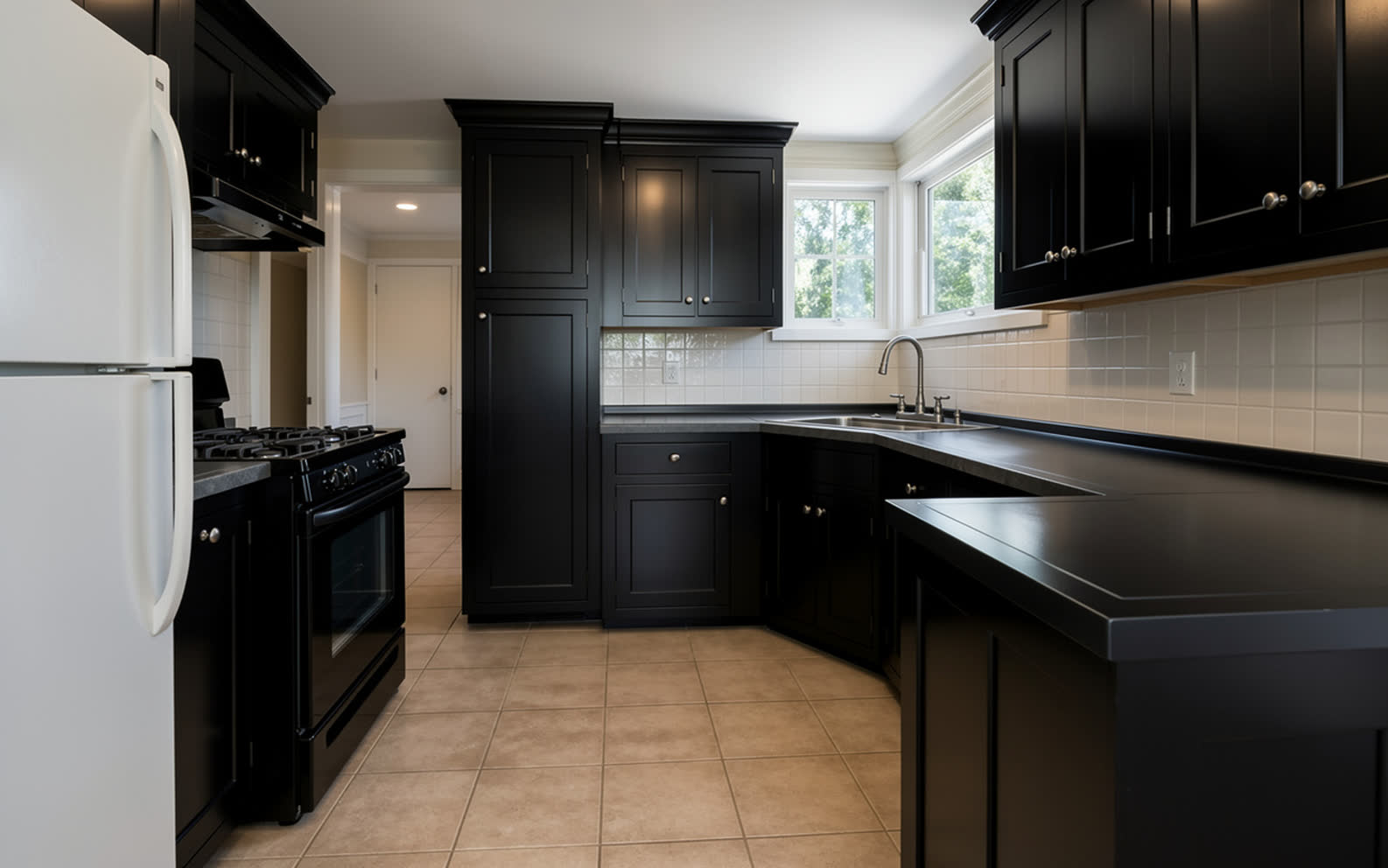
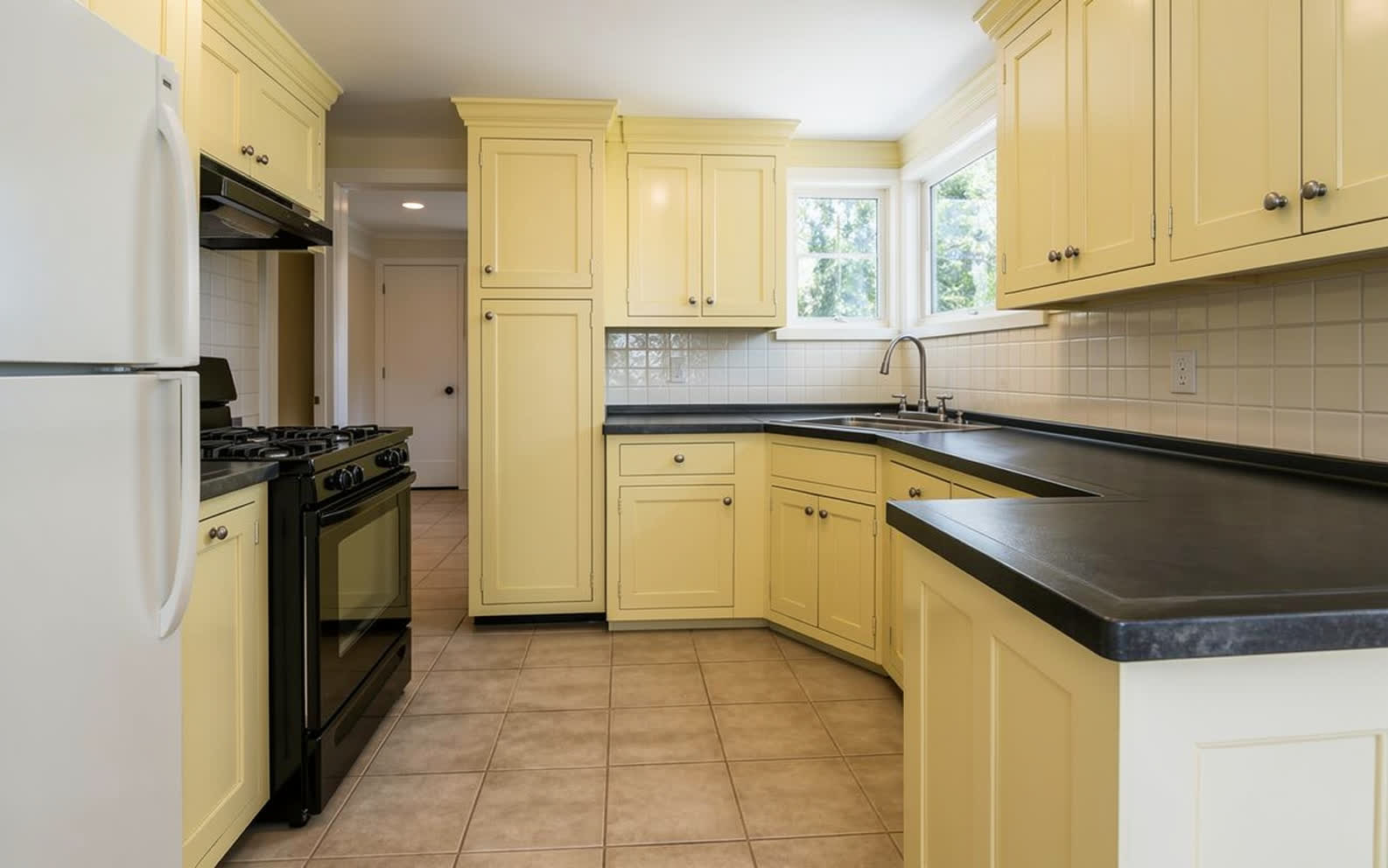
That is one room and a shortlist of colors. Yours is the room you actually have to live in.
Questions people ask
Will it look like my kitchen, or will it invent a different room?
It stays your kitchen. The tool is instructed to keep the walls, windows, doors, ceiling, floor plan, camera angle and every appliance exactly where they are. Only the cabinet fronts change. This is the main complaint people have about general AI design tools, and it is the thing we built the product around.
Can I test a specific paint color from a specific brand?
Yes. Take a photo of the paint sample you are holding and upload it as the second image. The tool matches that color and finish rather than an approximation of it. This is the closest you can get to seeing a real product on your real kitchen without buying it.
Does it work on wood cabinets, or only on ones that are already painted?
Both. Painting over wood is the most common use. The tool keeps the door profile and the panel shapes, so oak shaker doors still look like oak shaker doors, just in your new color.
How long does it take?
Under two minutes for one color. Most people test six or seven colors in a single sitting, which is the point. Trying the next one costs you nothing but a click.
Should I paint my cabinets or replace them?
If the boxes are solid and the doors are not damaged or swollen, painting is far cheaper and gets you most of the visual change. Replace them if the layout is wrong for how you cook, if the boxes are failing, or if you want a different door shape. If it is only the door style you want to change, use Cabinet Front Redesign instead of paint.
What finish should I choose?
Satin or eggshell is what most kitchen painters use. It wipes clean and it does not show every mark. Matte looks softer and hides dents in older doors, but it marks around handles. High gloss shows everything, good and bad.
Is there a free version?
No. Every plan is paid. Every plan also comes with 30 days money back and one-click cancellation, and failed generations never cost you credits. See the pricing page for current plans.
What to look at next
Cabinet Front Redesign
If it is the door shape you want to change, not the color. Shaker, flat or beaded, on your existing kitchen.
Change Backsplash
The tile behind the counter is the thing your new cabinet color has to sit next to.
Material Swap
If the countertop is changing too. Test the pair together rather than one at a time.
Change Flooring
The floor is the other big surface your new cabinet color has to live with.
Redesign
If you are changing everything and want to see the whole room in one go, in any of 200+ styles.
Now do it to your own cabinets
You have seen what a color does to this kitchen. That is not the kitchen you care about. Upload one photo of yours, pick a color, and look at your own room in it.
One photo. About a minute. Your room, not this one.