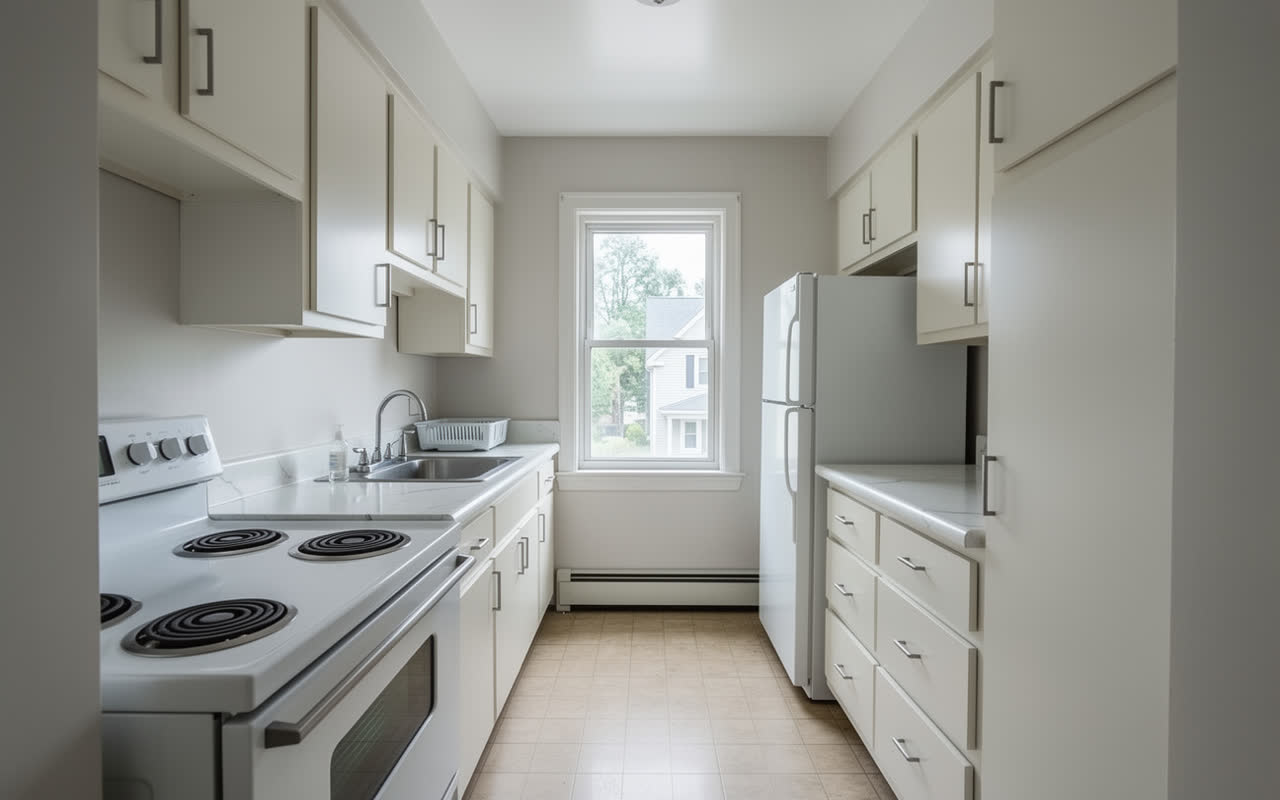
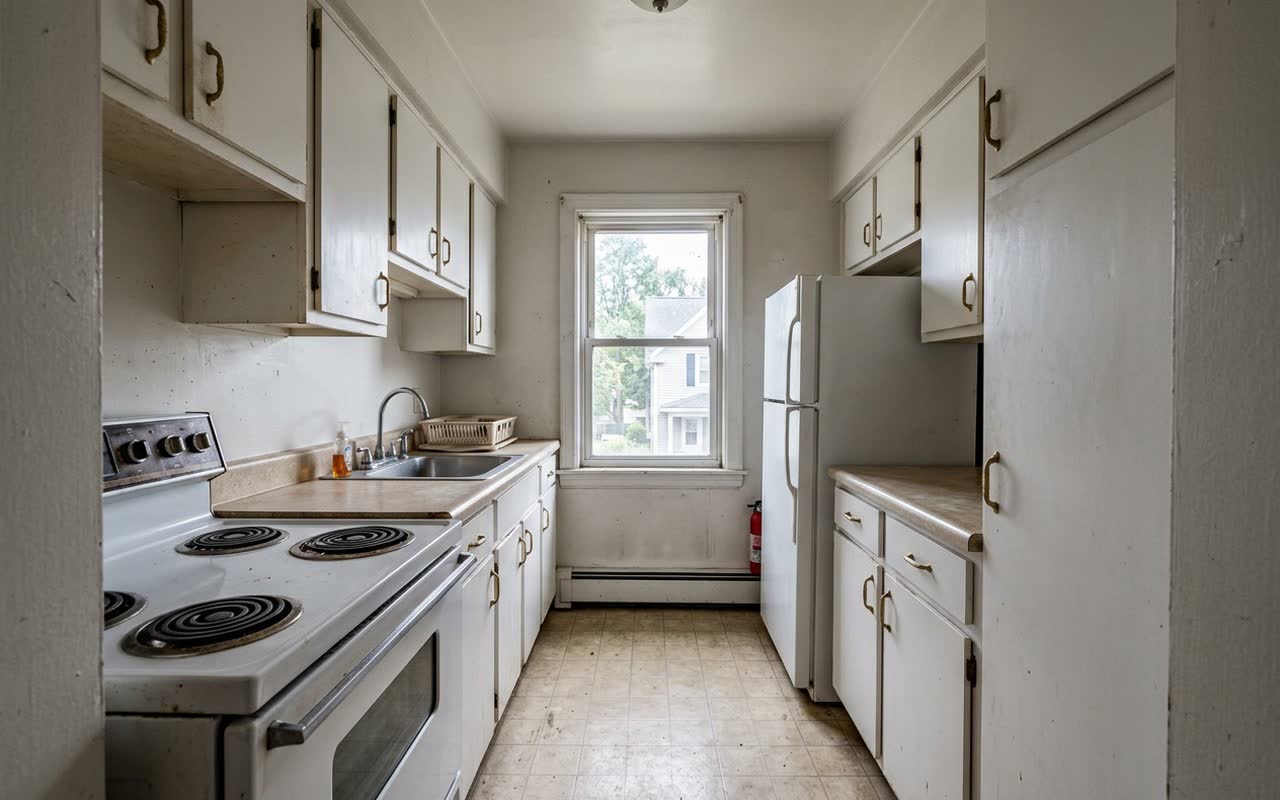
See your whole kitchen remodelled, without moving a single wall
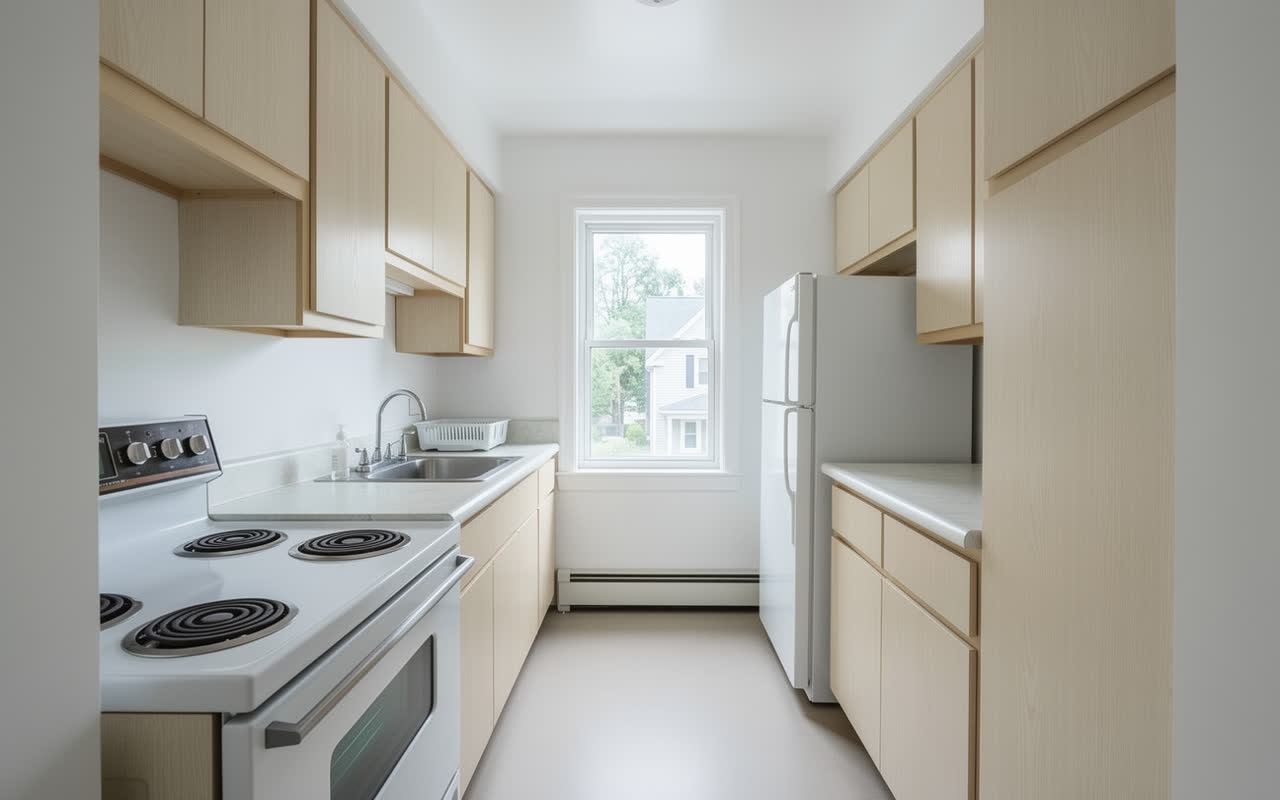
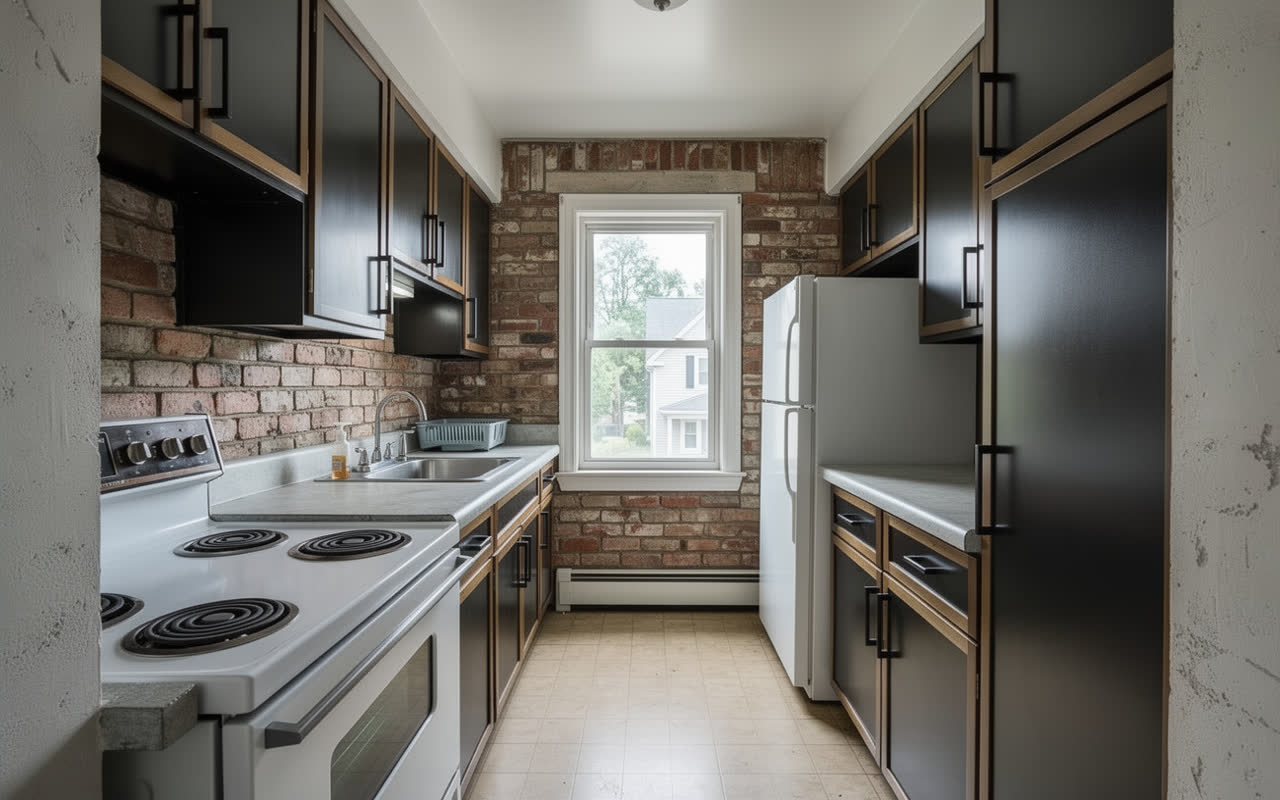
See a whole kitchen remodeled on a real room instead of in a magazine. Every picture on this page is the same kitchen in a different style, with the sink, the range and the window still where they started. To see your room this way, upload a photo on the home page.
How it works on your own kitchen
Pick from 200+ styles, or describe the look you want in your own words.
Your sink, range and fridge stay exactly where they are.
Opens the tool on the home page. Bring one photo of your kitchen.
What this tool actually does
Redesign takes one photograph of your kitchen and a style. It gives you back the same room, restyled.
Every cabinet, appliance and fixture keeps its exact position, orientation and footprint. What changes is what they are made of and what they look like: the doors, the countertops, the backsplash, the handles, the flooring, the lighting. An item can be swapped for an equivalent item of the same type and similar size in the same spot, so a freestanding range can become a better freestanding range, but it cannot move.
The architecture is locked separately. Walls, windows, the view through those windows, doors, the ceiling, the floor plan and any radiators stay where they are. So does the camera angle, so you are comparing the same view you photographed.
The problem with a folder full of other people's kitchens
You have been collecting pictures for months. Pinterest, Instagram, a magazine you kept. You know exactly which kitchens you like.
You still cannot tell whether any of them would work in your room.
That is not a failure of taste. It is a real limit. Every photo you have saved is of a different room: a different size, a different ceiling height, a window in a different place, light coming from a different direction. A kitchen that looks calm and bright in a wide room with two south-facing windows can look heavy and dark in a narrow one with a single north window. Nothing in the photo tells you which one yours is.
So the decision stalls. Kitchen renovations already have the longest planning phase of any room, at 9.6 months of planning against 5.1 months of building, and homeowners spend about twice as long planning as building.
Then there is the second trap, which costs money rather than time. When you cannot picture the whole thing, you decide it piece by piece, and each piece is decided in isolation while you are standing in a showroom being helpful. That is how 31% of renovating homeowners end up expanding the scope of the project mid renovation. On a job with a median cost of $55,000, deciding late is the expensive way to decide.
The other thing people try is a general AI design tool. The complaint is always the same: it gives you back a different room. A window appears that you do not have. The layout quietly rearranges. It is a nice picture of somebody else's kitchen, which is exactly the thing you already had too many of.
How it works
1. Upload a photo of your kitchen. Stand back far enough to get a full run of cabinets in the frame. Daylight helps. If a wall is not in the photo, it will not be in the result.
2. Pick a style. There are 200+ styles across roughly 16 categories, from Modern and Farmhouse to Japandi and Organic Modern. If none of them is right, describe the look in your own words instead.
3. Compare the same room, restyled. Your window is still your window. Your range is still where your range is. Change the style and look again. Seeing the same room four ways is far more useful than seeing four different rooms once.
Choosing a style that works in your actual room
Some of this is worth knowing whether or not you use our tool.
Start from what you are not replacing. Almost nobody replaces everything. The floor is staying, or the window frames are, or the radiator, or the door into the hallway. Those things are already choosing your palette for you. A style is a good fit when it works with what is staying, not when it looks best in isolation.
Look at which way your room faces. A north facing kitchen gets cool, even, blue-leaning light all day. A south facing one gets warm light that moves across the room. Cool grays and stark whites can look clinical in a north facing room, and the same colors look crisp in a south facing one. This is the single biggest reason a style that looked wonderful online feels wrong once it is in.
Be honest about the size of the room. Some looks need space to read properly. Heavy dark cabinets, deep shaker profiles and open shelving all take visual room. In a narrow galley they close the space in. If your room is small, the styles that tend to work are the ones with flat fronts, fewer lines and less contrast.
Count how many materials you are introducing. A kitchen that looks calm usually has three main materials and no more. A kitchen that looks busy usually has six. When you compare two redesigns, count them.
Decide the direction before you price anything. Once you are getting quotes, every change costs money and time. Settling the look first is what stops the scope creeping later.
Separate the things that date from the things that last. The parts of a kitchen that are expensive to change are the boxes, the countertop and the floor. The parts that are cheap to change are the door color, the handles, the tile and the lighting. A style choice is much safer when the trend-led part of it sits in the cheap layer. If a look depends on a very of-the-moment countertop, you are committing the most expensive surface in the room to the thing most likely to feel dated first.
If two of you disagree, stop arguing in words. The most common piece of advice in kitchen forums, from people who have been through it, is to stop describing what you mean and show a picture instead. Two people describing "modern" are usually describing two different rooms. Two people looking at the same render of their own kitchen are having a much shorter conversation.
The same room, in six different styles
These are demonstration kitchens, not customer photos. Each starting room was generated, and every result below is the real Redesign output run on it, with nothing retouched afterwards.
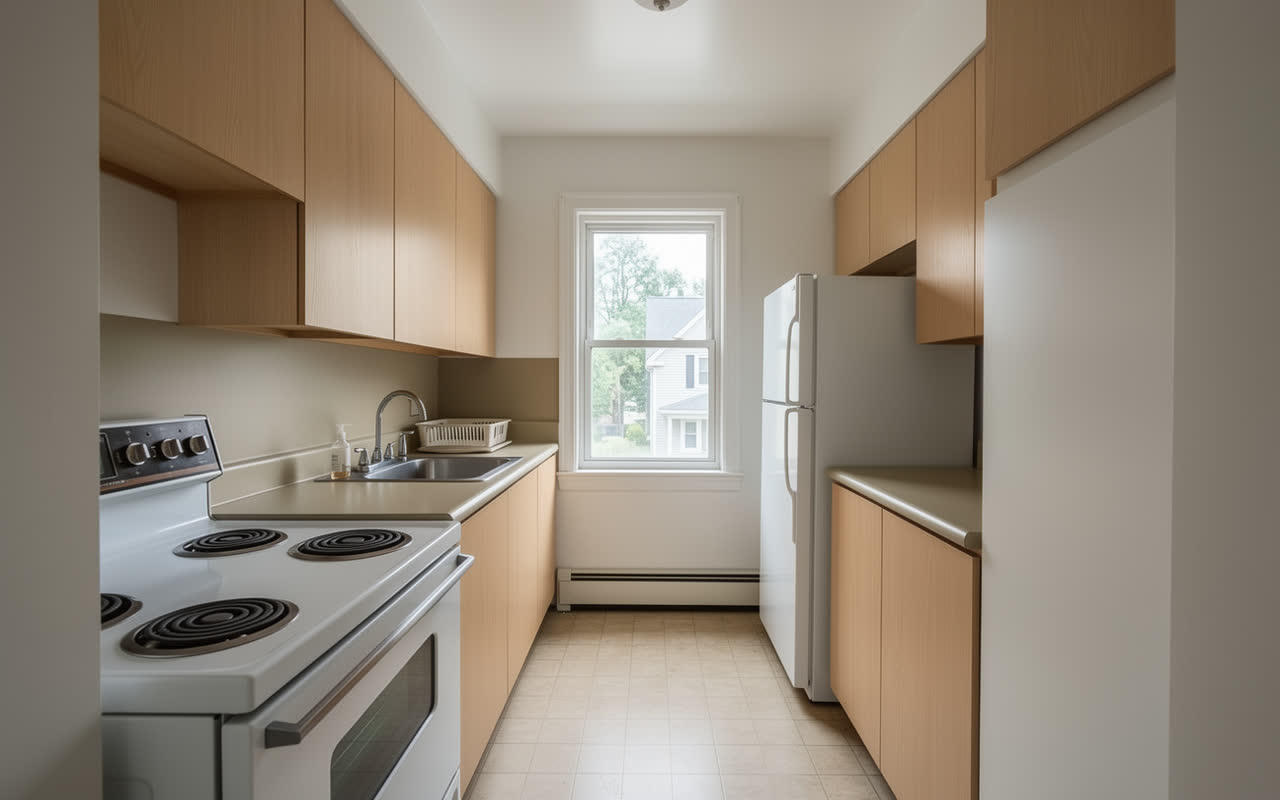
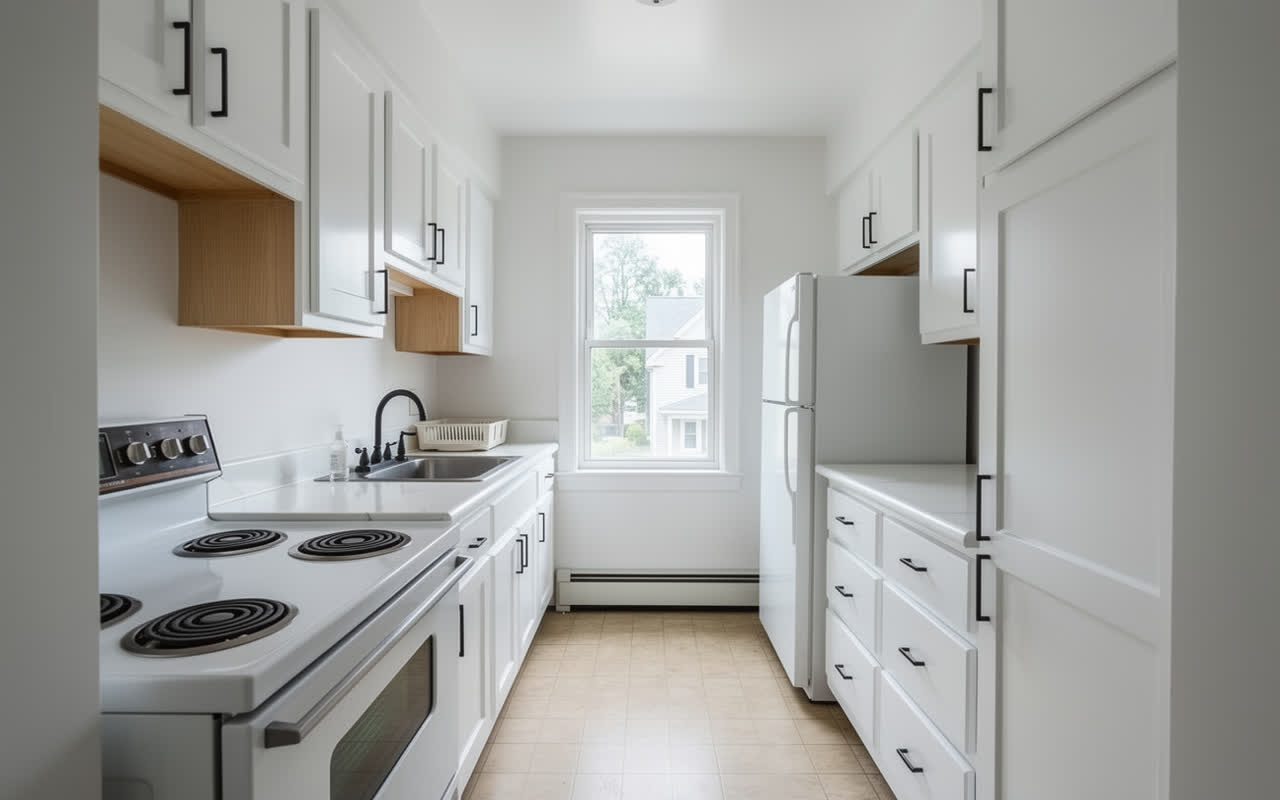
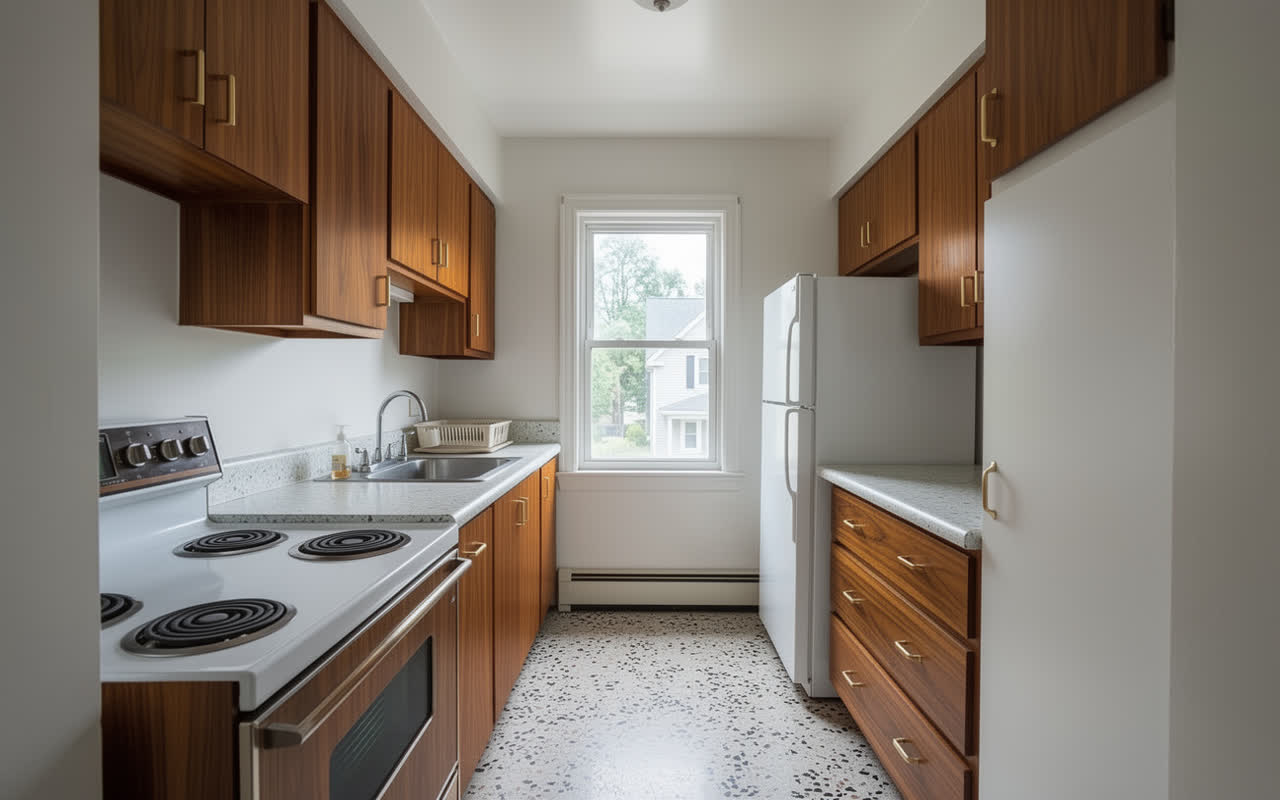
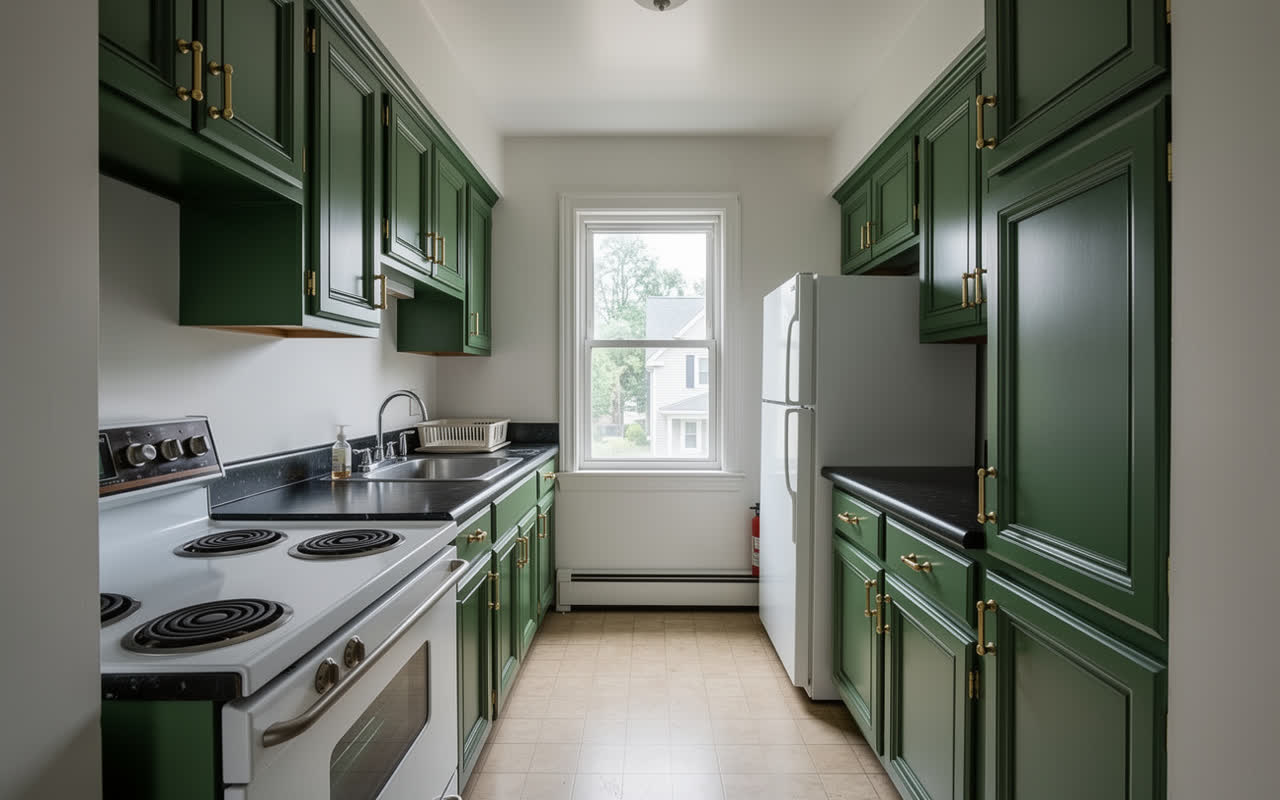
A style is easy to like on somebody else’s room. The test is whether it still holds up on yours.
Questions people ask
Will it move my sink or my range?
No. The tool is instructed to keep every appliance and cabinet in its exact position, orientation and footprint. It can change what they look like and what they are made of, and it can swap an item for an equivalent one of similar size in the same spot, but it cannot move anything. That is the difference between a redesign you can act on and a picture of somebody else's kitchen.
Can it show me a layout change instead?
Not this tool. Redesign deliberately locks the layout, because the point is to see your own room. If you are moving walls or plumbing, use a floor plan tool for the layout first, then come back here to decide how it should look.
How many styles can I try?
There are 200+ styles in the library, across roughly 16 categories, including current ones like Japandi and Organic Modern. You can also describe a look in your own words if none of them is quite right.
Is this good enough to show a builder?
It is good enough to agree on a direction, which is where most projects get stuck. It is not a technical drawing and it has no dimensions, so it will not replace a plan. Use it to settle what you want, then have the plan drawn.
What makes a good photo to upload?
Stand back far enough to get a full run of cabinets in the frame, and shoot in daylight if you can. A phone photo is fine. If a wall is missing from the photo, it will be missing from the result.
Should I redesign the whole room or change one thing?
If you are replacing the kitchen, redesign the whole room. If you are keeping the cabinets and changing the color, the floor or the tile, use the single-change tools instead. They hold everything else steady, which makes the comparison easier to judge.
Now do it to your own kitchen
You have a folder of kitchens you like and not one of them is your room. Put your own kitchen on the screen and see which of those styles survives it.
One photo. About a minute. Your room, not this one.