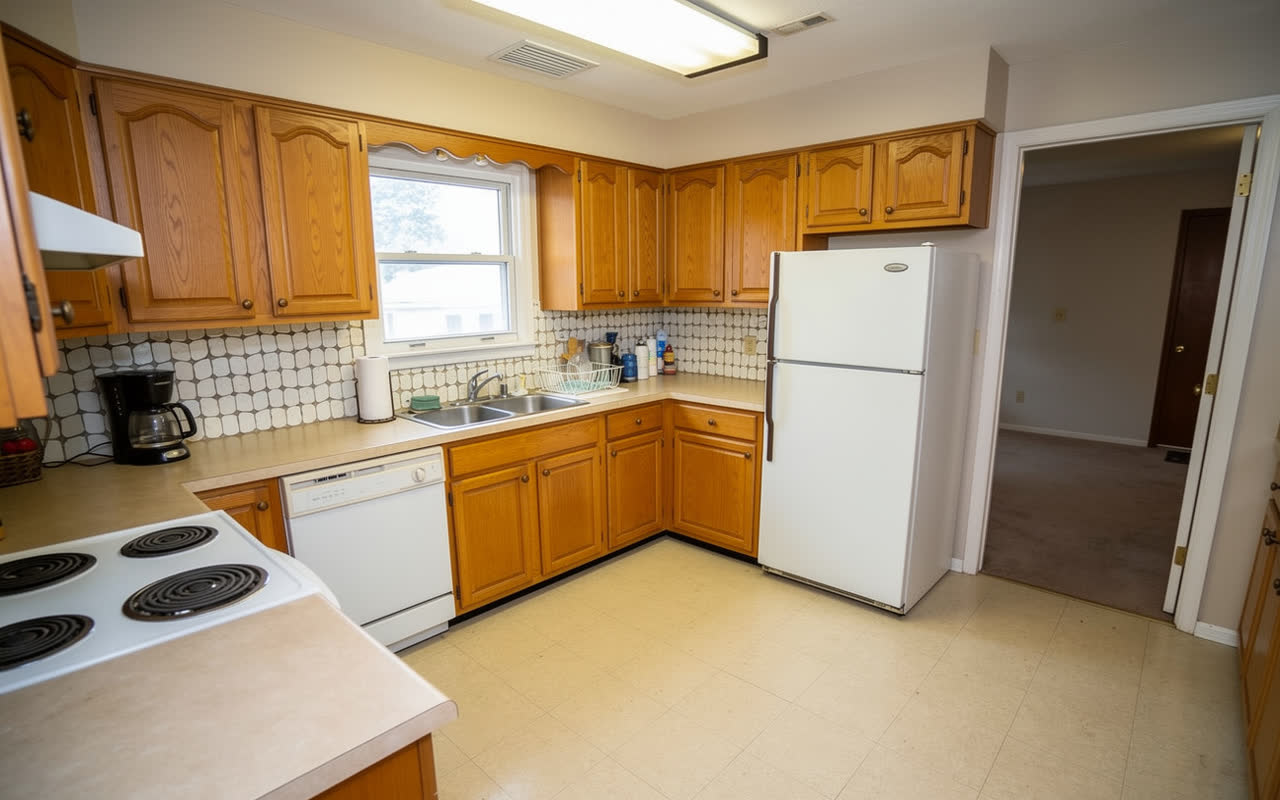
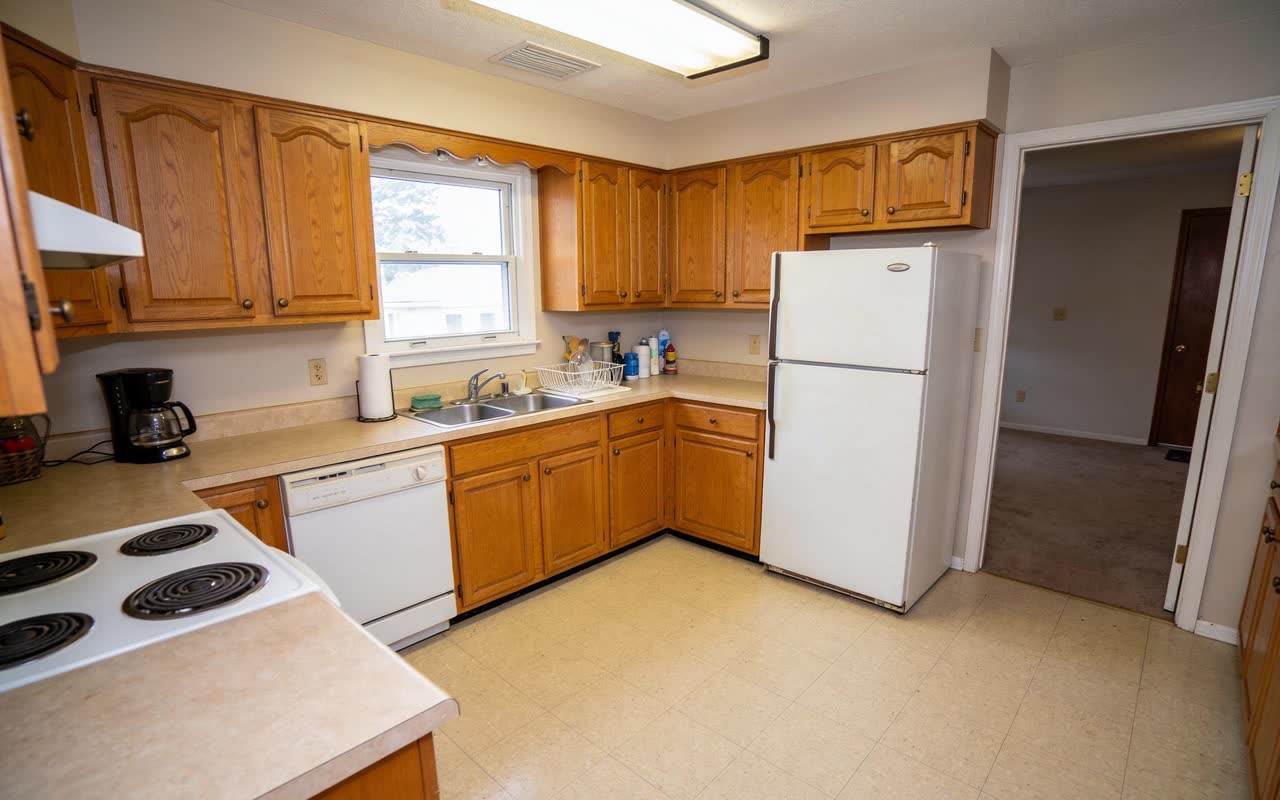
See the backsplash tile on your own wall, at the size it will actually be
See tile on a real kitchen wall, at the size it will actually be. Every picture on this page is the same wall with a different tile, with the outlets and the faucet still sitting on top of it. To try a tile on your wall, upload a photo on the home page.
How it works on your own kitchen
A photo of a single tile works. So does a photo of a sample board in the store.
It finds the wall between your countertop and your cabinets, and changes only that.
Opens the tool on the home page. Bring one photo of your kitchen.
What this tool actually does
Change Backsplash takes two images. The first is a photograph of your kitchen. The second is the tile or material you are thinking about.
It finds the backsplash zone on its own. That means the wall between your countertop and your wall cabinets, including the returns at the ends of the run and the taller section behind the cooktop or the range hood. It replaces that region and nothing else.
It matches the perspective of the wall, the scale the tile would really be, the grout lines and the light already in your photo. Outlets, switches, faucets, shelves, rails and appliances are excluded, and they sit correctly on top of the new tile rather than disappearing under it.
One tile in your hand tells you almost nothing
A backsplash is the smallest surface in a kitchen and it causes an unreasonable number of arguments.
Part of the reason is how it is sold. You choose it from one tile, or from a sample board the size of a place mat, held at eye level in a bright store. Then you buy four square meters of it and put it on a wall that runs the length of your kitchen.
Three things change on the way.
Repetition. A pattern you cannot see in one tile becomes the only thing you can see across a whole run. Marble-look tiles are the worst for this, because the same veining repeats every few tiles and, once you have noticed, you cannot stop noticing.
Grout. Grout is usually decided last, by somebody else, in a hurry. It is also the thing that decides how the wall reads from across the room. The same white tile with white grout is a soft continuous surface. With dark gray grout it is a grid. Those are two completely different walls.
Scale. Small tiles mean more lines. A hexagon or a penny tile that looks charming close up becomes busy at full size, especially on a long run. Large format tiles do the opposite, and can look flat and cold in a small kitchen.
None of that is visible in the store, and none of it is your fault. It is a surface you are judging at one hundredth of the size you will actually live with.
There is one more thing worth knowing before you go shopping. Among renovating homeowners, 35% end up choosing higher end materials than they originally planned. Tile is where that happens most easily, because the difference between the tile you planned and the one you fell in love with is often small per square meter and feels like nothing at the time.
How it works
1. Upload a photo of your kitchen. Shoot the run straight on if you can, rather than at a sharp angle. You want the wall you are changing clearly visible between the countertop and the cabinets.
2. Photograph the tile. One tile in your hand is enough. A sample board on a showroom wall works too. Shoot it flat and in daylight, so the color you upload is the color you saw.
3. Look at the whole wall. You get your kitchen back with that tile at the size it would really be, with your outlets and your faucet still where they are. Try the next one. Comparing four tiles on the same wall takes about a minute.
Choosing a backsplash, and getting it right
Worth knowing whether or not you use our tool.
Decide the cabinets and the countertop first. The backsplash is the last of the three to choose and the easiest to change. It has to work with the other two, not the other way around. If you are still deciding the cabinet color, settle that first.
Pick the grout color deliberately. Matching the grout to the tile gives you a calm surface. Contrasting it gives you a pattern. Neither is wrong, but it should be a decision rather than something a tile setter picks on the day. Mid gray is the practical compromise behind a cooktop, because white grout stains and very dark grout shows hard water marks.
Match the tile size to the length of the run. Long runs can carry small tiles. Short awkward stretches, especially between a window and a corner, usually cannot, because you end up with cut tiles at both ends and no clean repeat in the middle.
Look at where the tile has to stop. Outlets, switches, window edges and the edge of a range hood all interrupt the pattern. A busy tile makes every one of those interruptions visible. A plain one hides them. This is the single most useful thing to check on a render of your own wall, because it is specific to your kitchen and no showroom board can show it.
Think about the area behind the cooktop. That area gets hot, greasy and splashed daily. Textured tiles, deeply crackled glazes and porous stone are all harder to clean there. Plenty of people use a plain tempered glass panel or a single slab behind the cooktop and their chosen tile everywhere else.
Check the sheen against your light. A glossy tile bounces light around, which helps a dark kitchen, but it also reflects your ceiling lights back at you in the evening. Matte tiles are calmer and show less. If your kitchen has recessed lights directly above the run, look at a gloss tile carefully before committing.
Buy it all at once. Tile color varies between production batches. Order the whole job, plus about ten percent for cuts, in a single order.
If you want to browse what is out there before you start testing, our kitchen backsplash ideas page covers the main tile types and what each one costs.
Not sure which style the tile should match? The free 2-minute quiz helps you find a style direction first. Then bring your tile back and try it on your own wall.
The same wall, in six different tiles
These are demonstration kitchens, not customer photos. Each starting room was generated, and every result below is the real Change Backsplash output run on it, with nothing retouched afterwards.
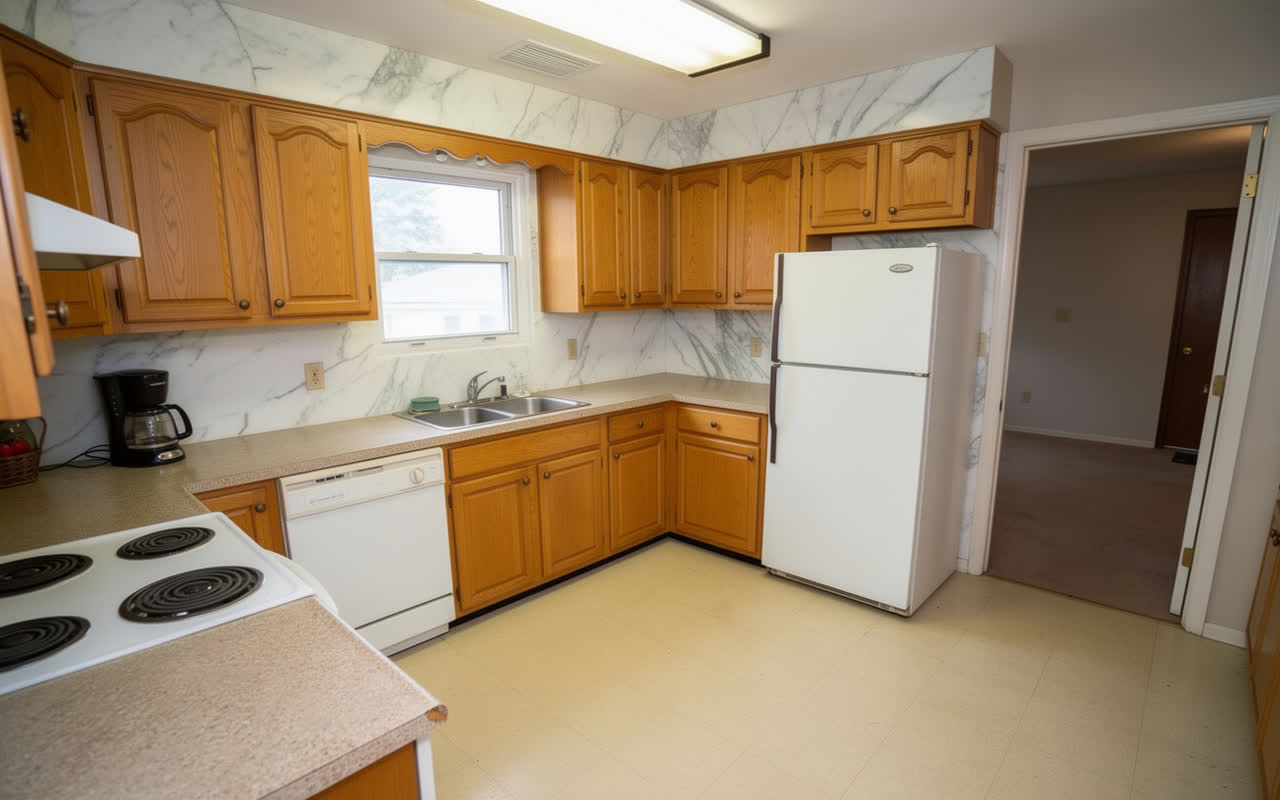
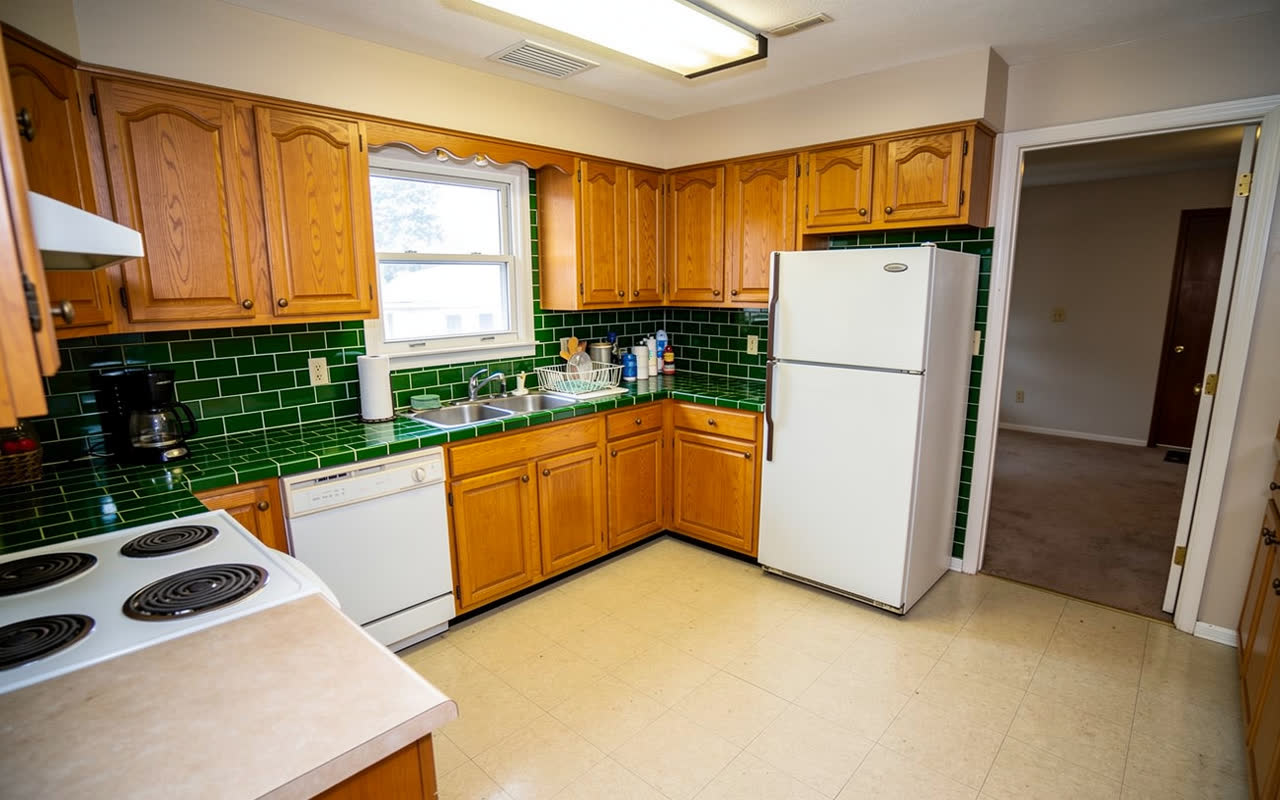
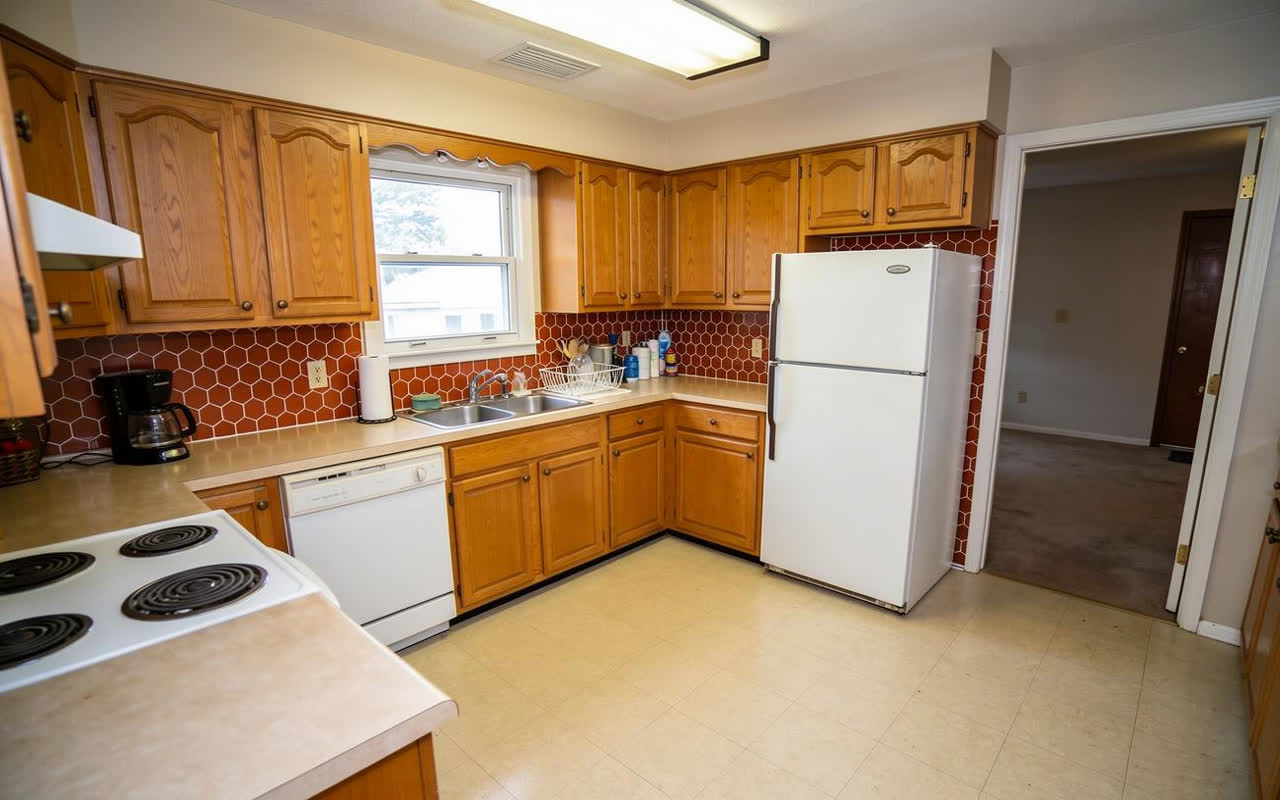
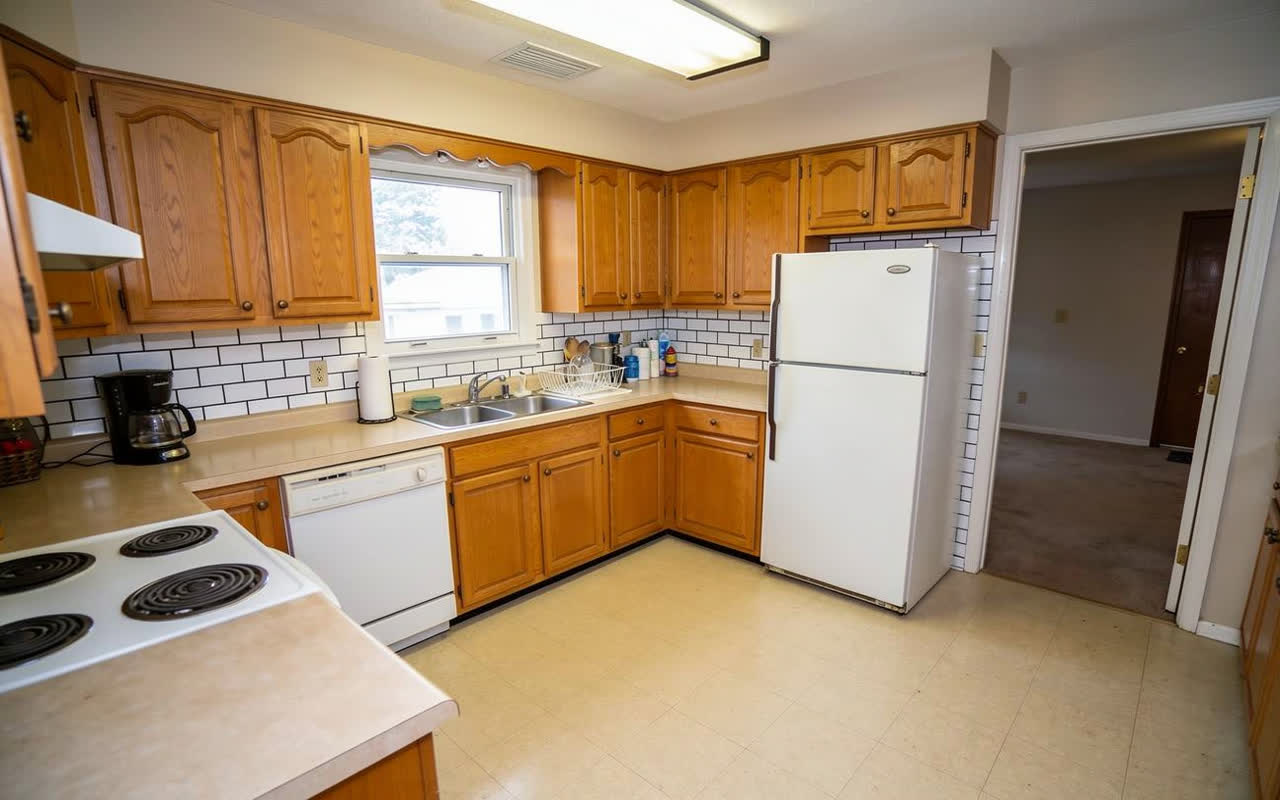
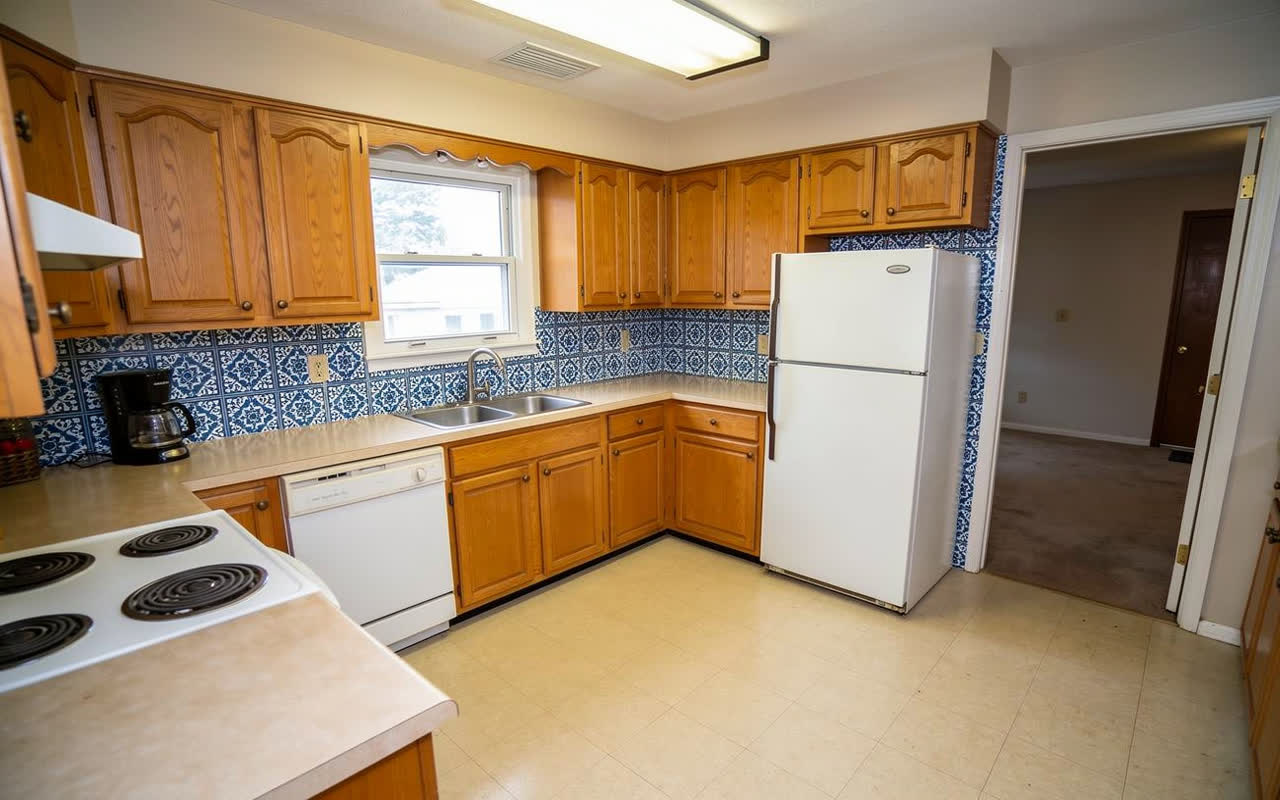
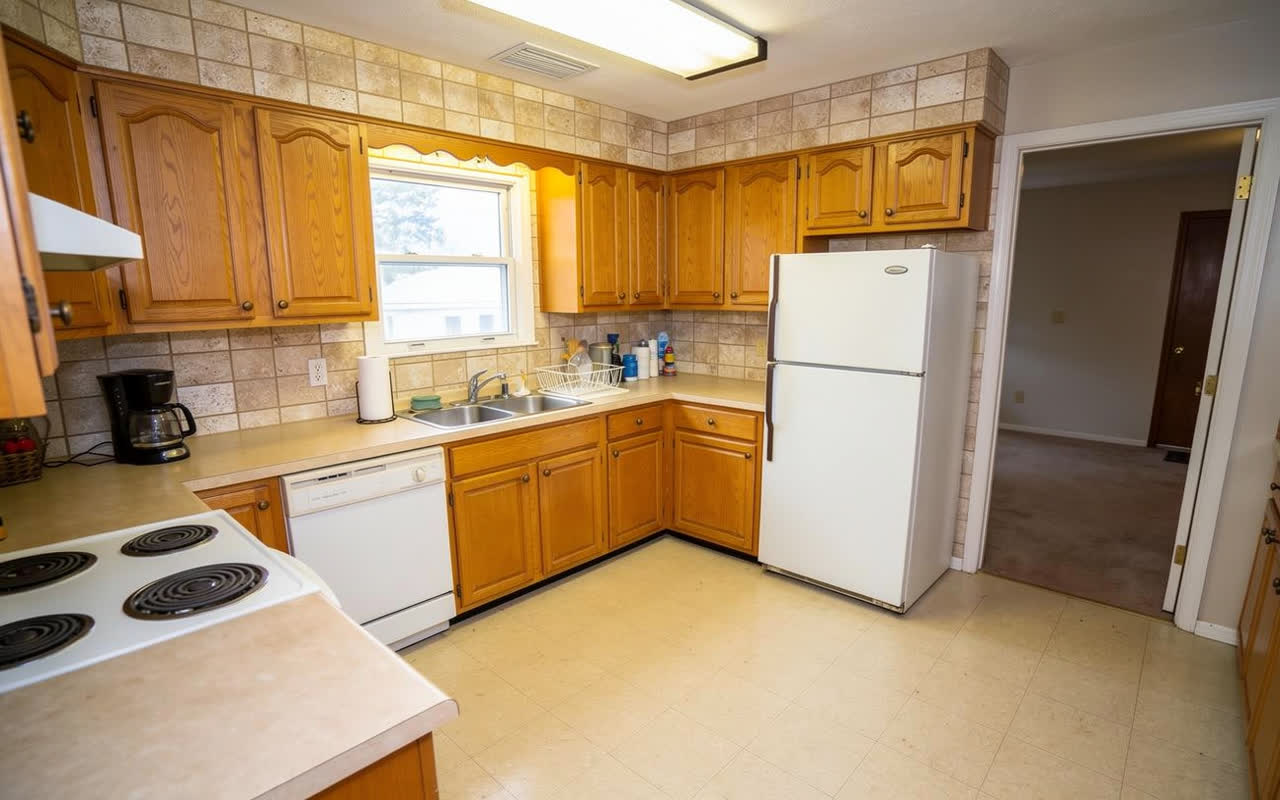
One tile in your hand tells you very little. Forty square feet of it on your own wall tells you everything.
Questions people ask
Can I upload a photo of my own kitchen?
Yes. The tool works from 1 photo of your kitchen and 1 photo of the tile. You get your own kitchen back with that tile behind the counter, and your outlets, faucet and cabinets where they are. The pictures on this page are demonstration kitchens. To try a tile on yours, use the button on this page.
Is this backsplash design software I have to install?
No. There is nothing to install. KitchenGPT runs in your browser, and you use it with your own photos.
Do I need a proper product photo of the tile?
No. A photo of one tile in your hand is enough, and so is a photo of a sample board on a showroom wall. Shoot it straight on and in daylight if you can, so the color is honest.
What happens to my outlets and switches?
They stay. The tool is instructed to exclude outlets, switches, faucets, shelves and rails, and to let them sit correctly on top of the new tile rather than being covered by it. That matters, because outlets are usually the thing that decides where a pattern can start and stop.
Does it tile the whole wall or just behind the counter?
It finds the backsplash zone, meaning the wall between the countertop and the wall cabinets, including the returns at the ends and the taller area behind the cooktop or the hood. The rest of your walls are left alone.
Will it show the grout?
Yes, and that is most of the point. It matches tile scale, grout and the light in your photo. Grout color changes a tiled wall more than most people expect, and you can only judge it at full size.
Can I see the same tile with a different cabinet color?
Yes, but do it in two steps. Change the cabinet color first with Cabinet Painter, then bring that result here and put the tile on it. Changing one thing at a time is the only way to tell which change you actually liked.
How much tile should I order?
Ask your tile setter, not us. The usual advice is to add ten percent for cuts and breakages, and more for patterns laid on a diagonal or in a herringbone, because those waste more at the edges. Order it all in one go so it comes from the same batch.
What to look at next
Cabinet Painter
The cabinet color and the tile have to live together. Settle the cabinets first, then the tile.
Material Swap
The countertop sits directly under the tile. Decide that first, then bring the tile to it.
Change Flooring
The floor and the tile both have to agree with the cabinets. Test them one at a time.
Redesign
If the tile is one part of a much bigger change, see the whole room at once instead.
Now put the tile on your own wall
Photograph the tile you are holding, upload a photo of your kitchen, and look at the thing you are about to order a box of.
One photo. About a minute. Your room, not this one.