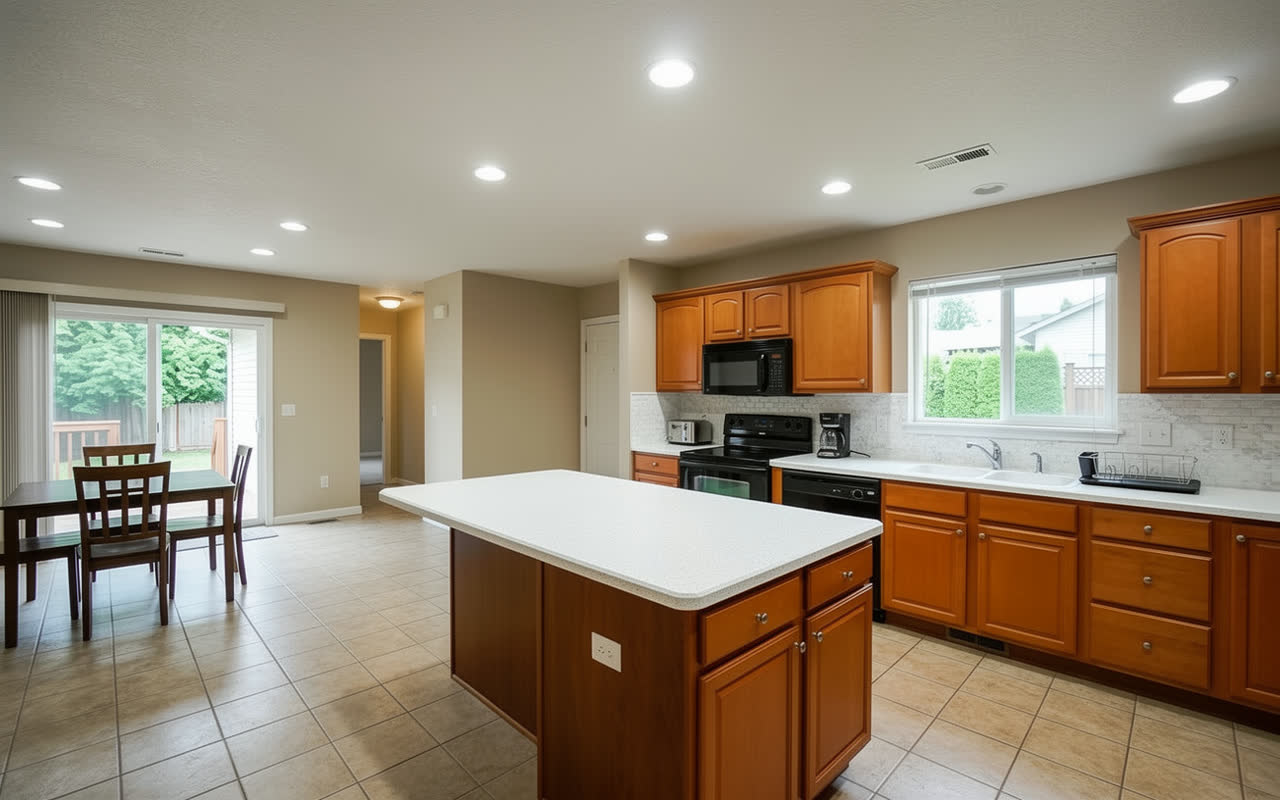
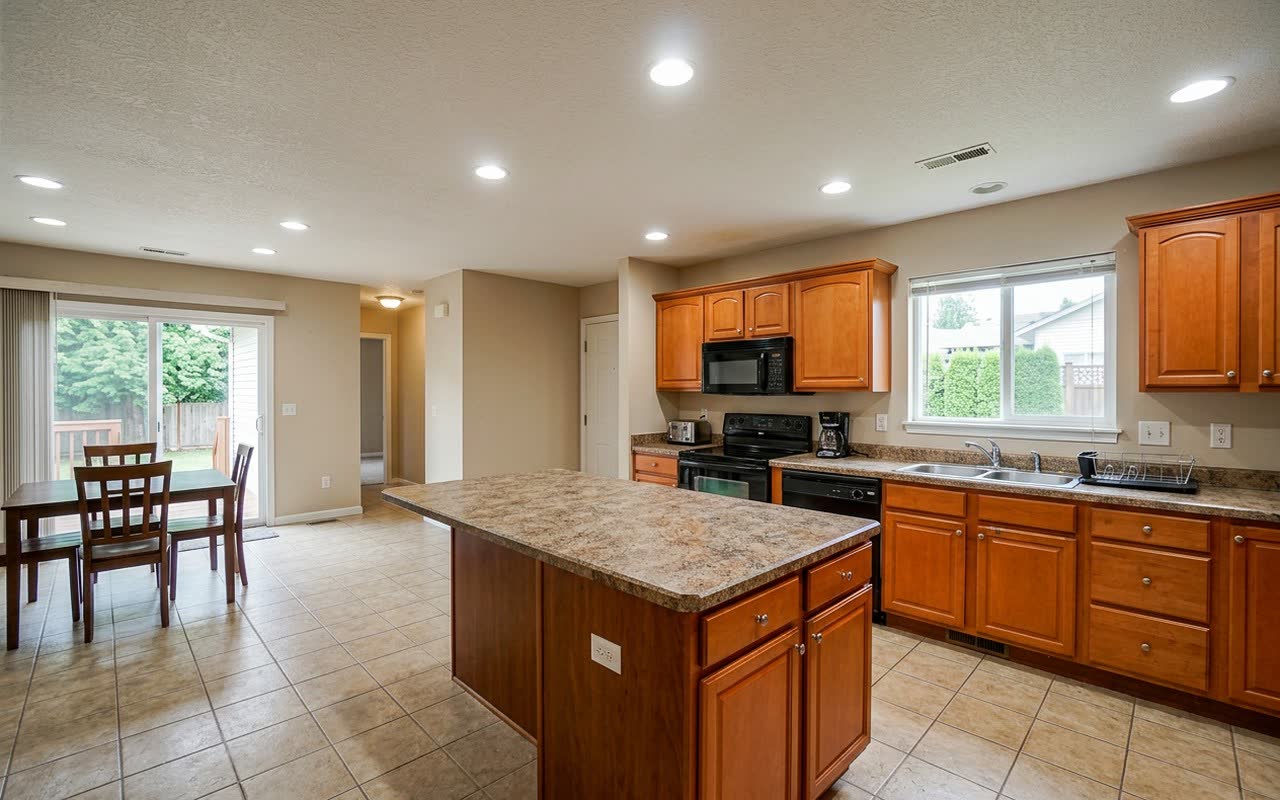
See the countertop in your own kitchen before the slab is cut
See countertop materials in a real kitchen instead of as a postcard-sized remnant. Every picture on this page is the same kitchen with a different material on the counters. To try one in your kitchen, upload a photo on the home page.
How it works on your own kitchen
A photo of a sample remnant works. So does a photo of a slab in the yard.
It finds the countertop surfaces and changes only those.
Opens the tool on the home page. Bring one photo of your kitchen.
What this tool actually does
Material Swap takes two images. The first is a photograph of your kitchen. The second is the countertop material you are considering, which can be a sample remnant, a photo of a slab in the yard, or a picture from a supplier's page.
It identifies the countertop surfaces in your photo, the perimeter runs and any island top, and replaces only those. The material is matched to the perspective of each run, at a realistic slab scale, with the veining or grain following the surface rather than sitting flat on top of it. Your existing edge thickness and profile are kept.
The sink, the faucets, the cooktop and anything sitting on the countertop are excluded, and they stay in front of the new surface rather than being covered by it. Cabinets, handles, backsplash, walls, floor, appliances and lighting are untouched.
The surface you choose from a postcard
A countertop is the most decided-on surface in a kitchen and the hardest to picture.
You choose it from a remnant about the size of a postcard, usually held vertically, usually under bright showroom lighting, usually next to a cabinet door sample you are also holding. Then it becomes four or five meters of horizontal surface in a room with completely different light.
Three things change on the way.
Orientation. You judged it vertical. You will live with it horizontal. A horizontal surface catches light from the window and reflects the ceiling, which makes polished stone read lighter and glossier at home than it did in your hand, and makes matte surfaces read flatter.
Scale of pattern. Veining is the obvious one. On a postcard, a marble sample shows one or two veins and looks restrained. Across a run you see the whole movement of the slab, and where the joints fall. Two slabs of the same named stone can look like different materials.
What it sits next to. The countertop touches everything: cabinet doors below, the backsplash behind, the sink cut into it. It is the one surface that has to work with all of the others at once. That is very hard to judge holding two samples in the air.
There is also a money reason to slow down here. Among renovating homeowners, 35% end up choosing higher end materials than they originally planned, and countertops are the classic place that happens. The upgrade from a mid-range quartz to a named marble is a per-square-meter difference that sounds small in the showroom and is not small across a whole kitchen, on a project with a median cost of $55,000.
How it works
1. Upload a photo of your kitchen. Stand slightly along the run rather than square to it, so the countertop surface is visible in perspective rather than as a thin line. Daylight helps.
2. Photograph the material. A remnant is ideal. A photo of the actual slab you have been offered is better still, because stone varies between slabs. Shoot it flat, filling the frame, in daylight.
3. Look at the whole run. Your kitchen comes back with that countertop in place, your faucet and cooktop still on top of it, your cabinets unchanged. Then try the next one. Comparing four materials against the same cabinets is the comparison that actually decides it.
Choosing a countertop, and getting it right
Worth knowing whether or not you use our tool.
Decide the cabinets first. There are hundreds of countertops and there are probably three cabinet colors you are seriously weighing. Settle the cabinets, then bring countertops to them. Doing it the other way around means testing everything twice.
Be honest about maintenance before you fall in love. Quartz is engineered, non-porous and the low-maintenance default, and it can scorch. Granite is hard and needs occasional sealing. Marble is the most beautiful and the least forgiving: it etches from lemon juice and wine, and that is not a defect, it is what the stone does. Butcher block is warm and cheap to repair, and it needs oiling and hates standing water near the sink. Soapstone and concrete both develop a patina, which some people love and some people call staining.
Look at the sample horizontally, in your own kitchen, at three times of day. Lay it flat on your existing countertop rather than holding it up. This is the single cheapest thing on this list and almost nobody does it.
Ask to see the actual slab. For any natural stone, the slab you get is not the slab in the brochure. Reputable fabricators will show you the specific slab and let you mark which part goes where. If they will not, that tells you something.
Think about where the joints fall. On a long run or an L-shape there will be joins. Where they land, and whether the pattern continues across them, is a real visual decision on veined materials and almost invisible on uniform ones. Ask before the template is cut, not after.
Match the edge to the room, not to the fashion. A thin edge reads modern and makes a heavy stone feel lighter. A thick edge reads solid and traditional. It changes the character of the countertop more than most people expect, and it is decided late and quickly.
Check the price includes the cutouts. Sink and cooktop cutouts, drainboard grooves, short backsplash pieces and any special edge are often quoted separately. Two quotes for "the same" countertop frequently differ because one of them includes these and the other does not.
The same kitchen, six different countertops
These are demonstration kitchens, not customer photos. Each starting room was generated, and every result below is the real Material Swap output run on it, with nothing retouched afterwards.
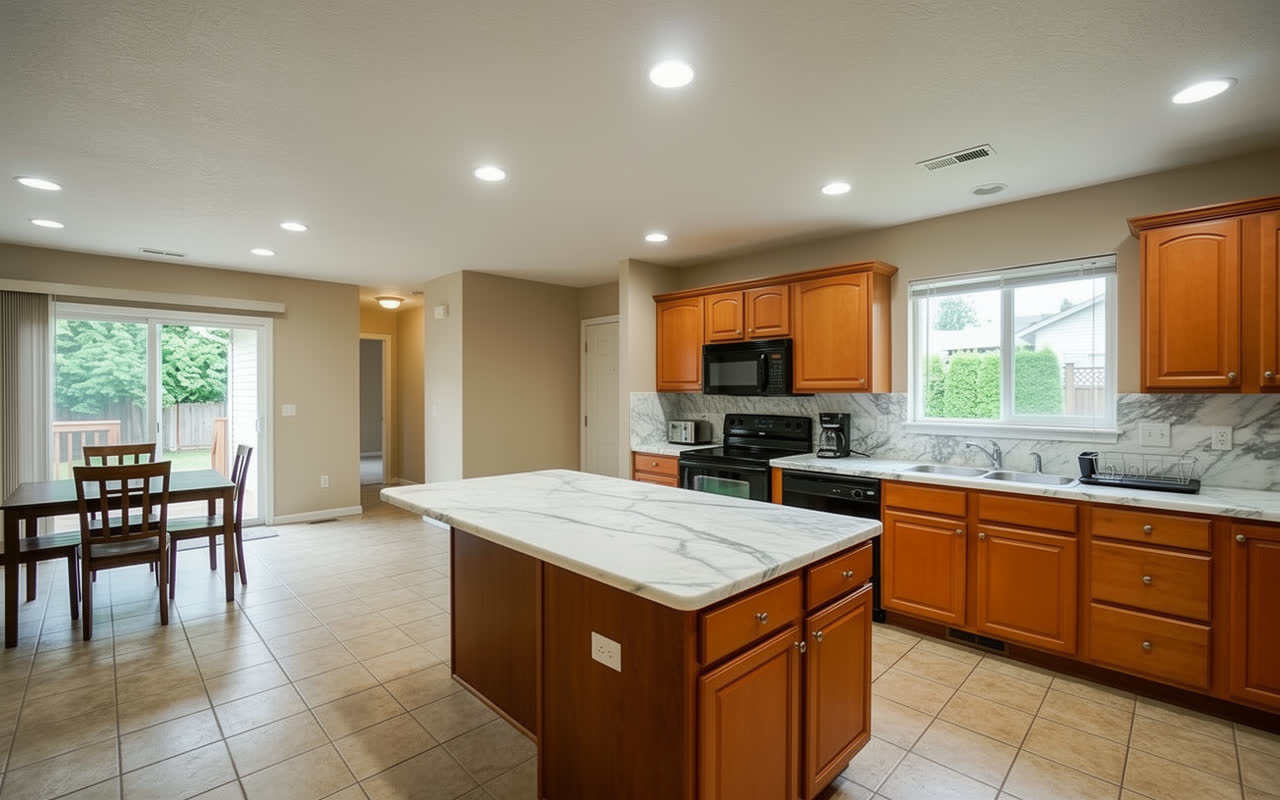
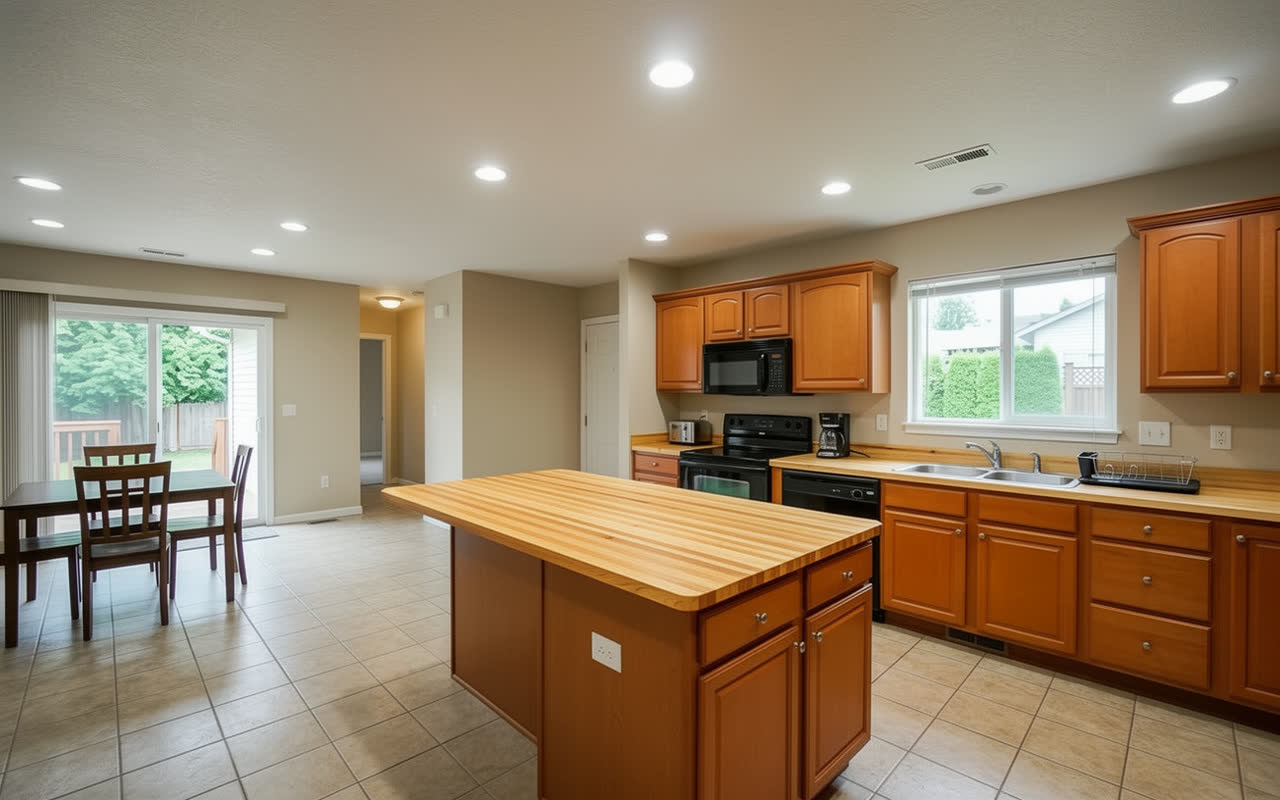
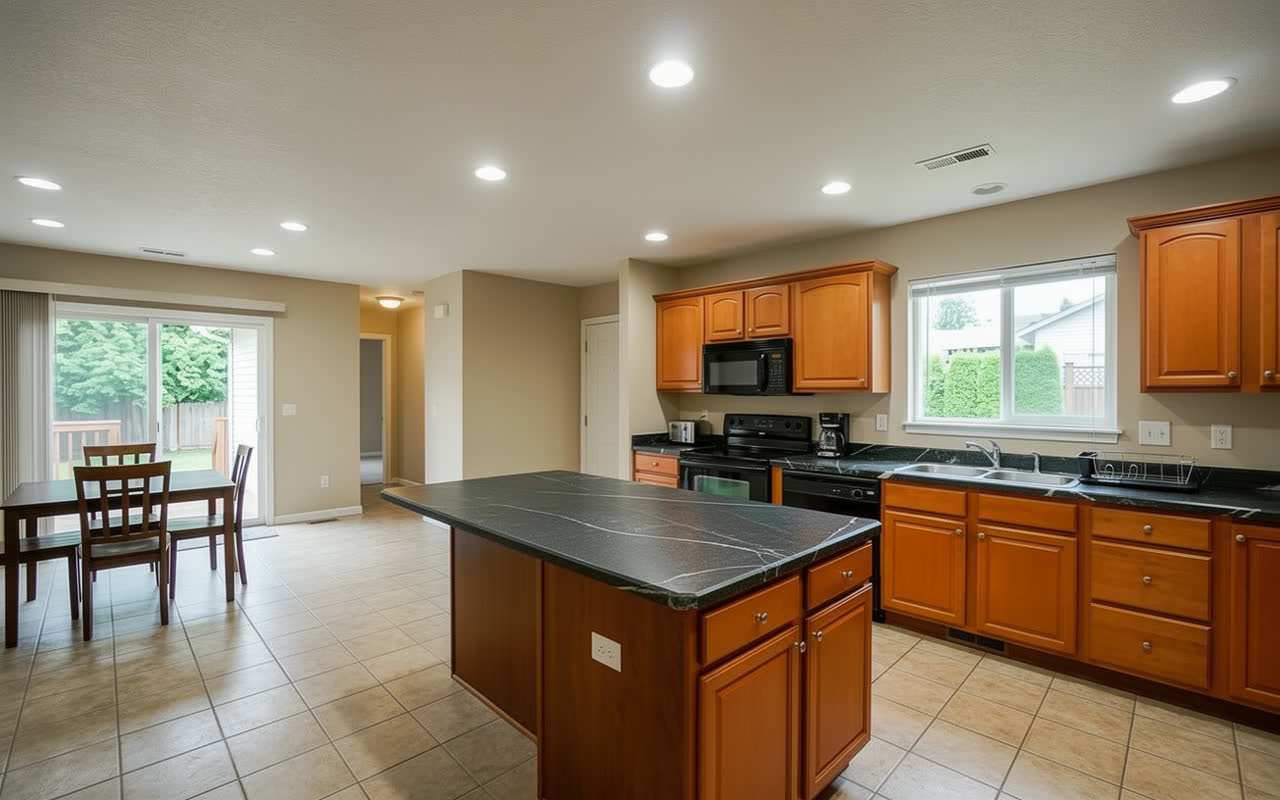
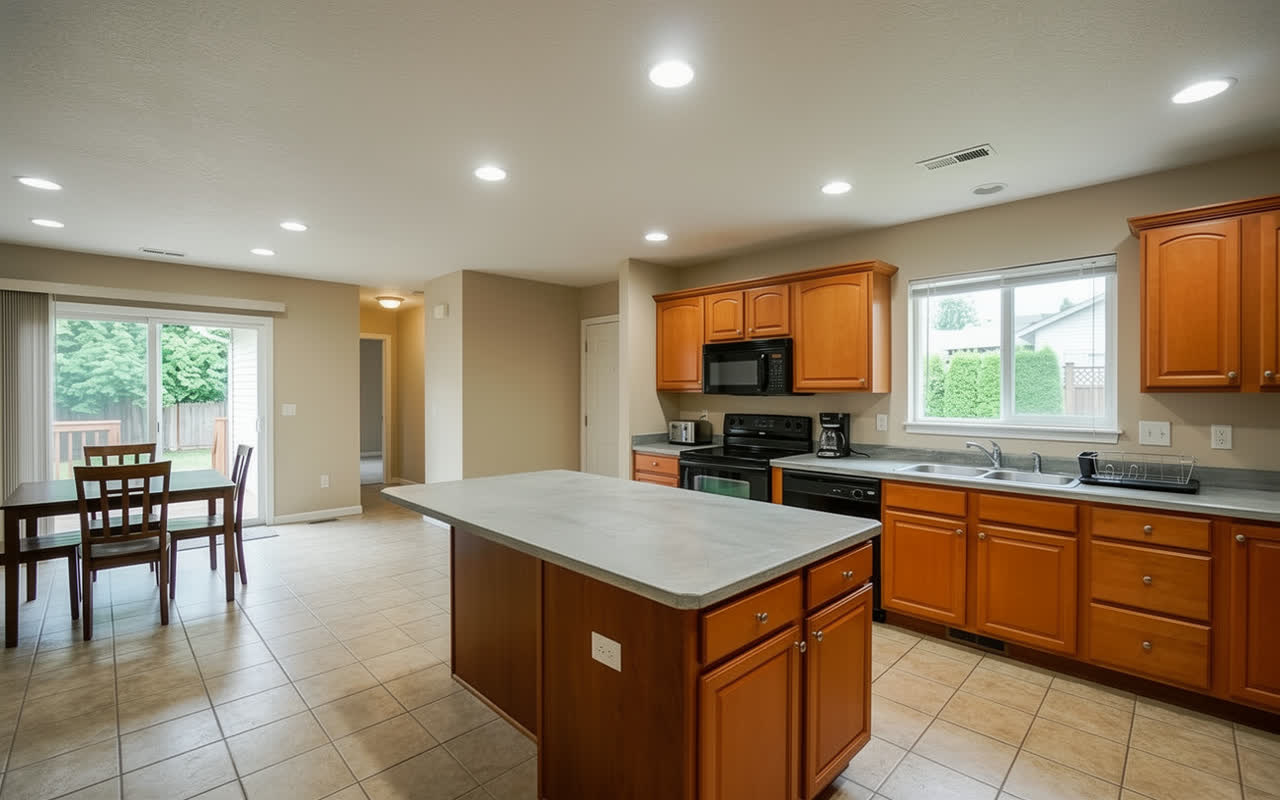
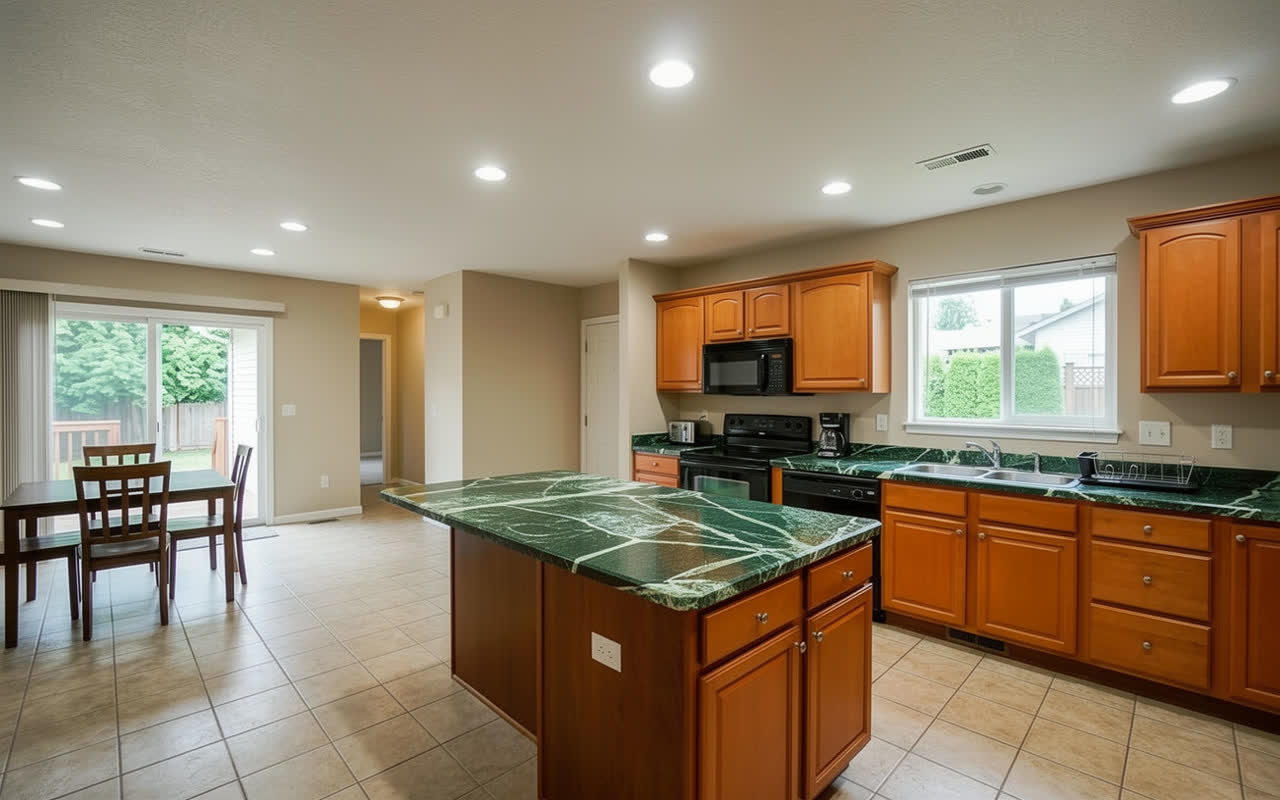
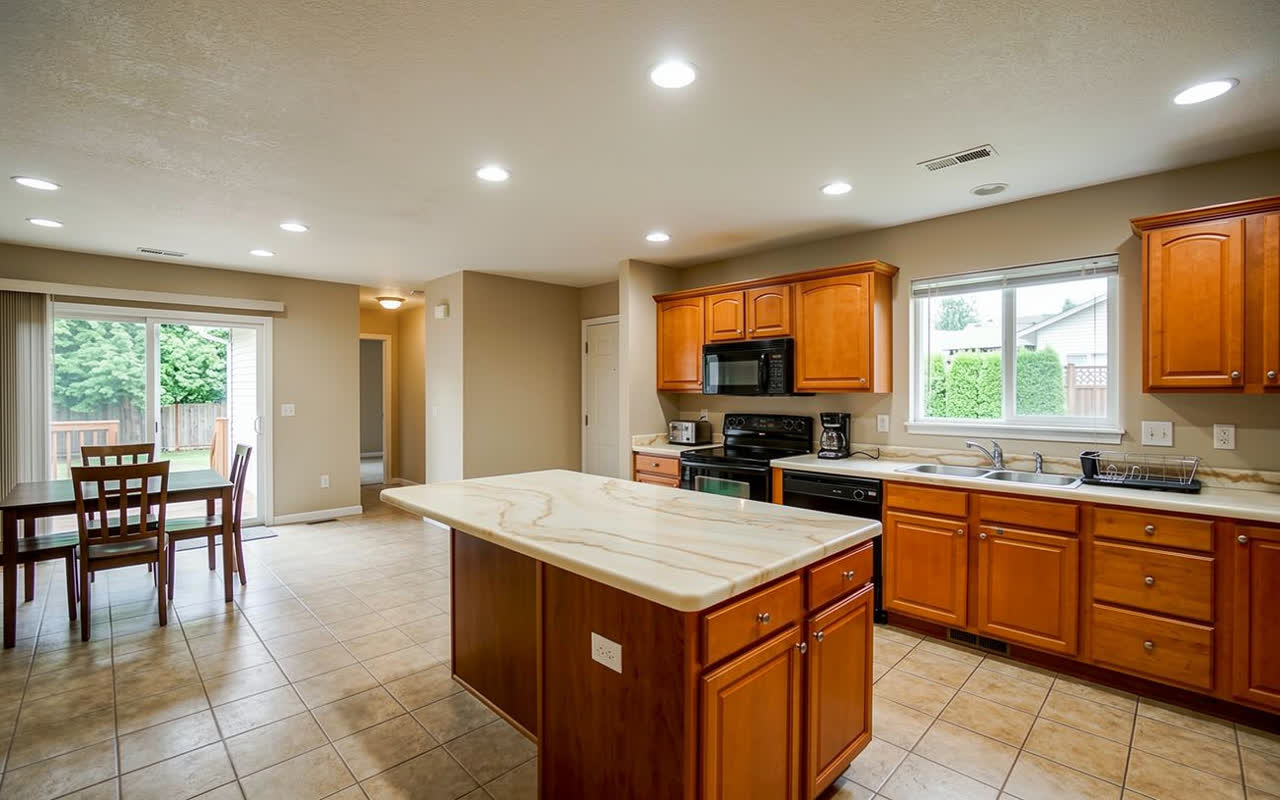
A sample the size of a postcard hides everything. Four meters of the same stone next to your cabinets does not.
Questions people ask
Does it change my cabinets too?
No. The tool identifies the countertop surfaces and changes only those. Your cabinets, doors, handles, sink, faucets, cooktop, backsplash, floor and appliances all stay exactly as they are, and anything sitting on the countertop stays sitting on it.
Can I test a specific slab I have been shown?
Yes, and this is the best use of it. Photograph the sample remnant or the slab in the yard and upload it. Stone varies enormously between slabs of the same name, so testing the actual slab beats testing a generic material.
Does it keep the edge profile?
It keeps the existing edge thickness and shape. If you are also changing the edge profile, that is a separate decision and this will not show it. Ask your fabricator for a physical edge sample.
Will it show the island as well as the runs?
Yes, if the island top is visible in your photo. It treats all the countertop surfaces in the picture together, which is usually what you want, because a mismatched island is a deliberate choice rather than an accident.
Which countertop should I choose?
It depends on how you cook and how much maintenance you accept. Quartz is the low-maintenance default. Marble is beautiful and will etch and stain. Butcher block is warm and needs oiling. Soapstone and concrete both develop a patina. There is more on all of this further up the page.
Should I decide the countertop or the cabinets first?
Cabinets first, almost always. There are more countertops available than there are cabinet colors you are seriously weighing, and the countertop has to work with the cabinets rather than the other way around.
What to look at next
Cabinet Painter
Decide the cabinet color first, then bring countertops to it. That order saves you testing everything twice.
Change Backsplash
The tile sits directly above the countertop and has to agree with it. Test it once the countertop is settled.
Change Flooring
The other large surface in the room. Judge it against the countertop you have chosen.
Now put the material on your own counters
Photograph the slab or the remnant you were shown, upload a photo of your kitchen, and see the material run the whole length of your own room.
One photo. About a minute. Your room, not this one.