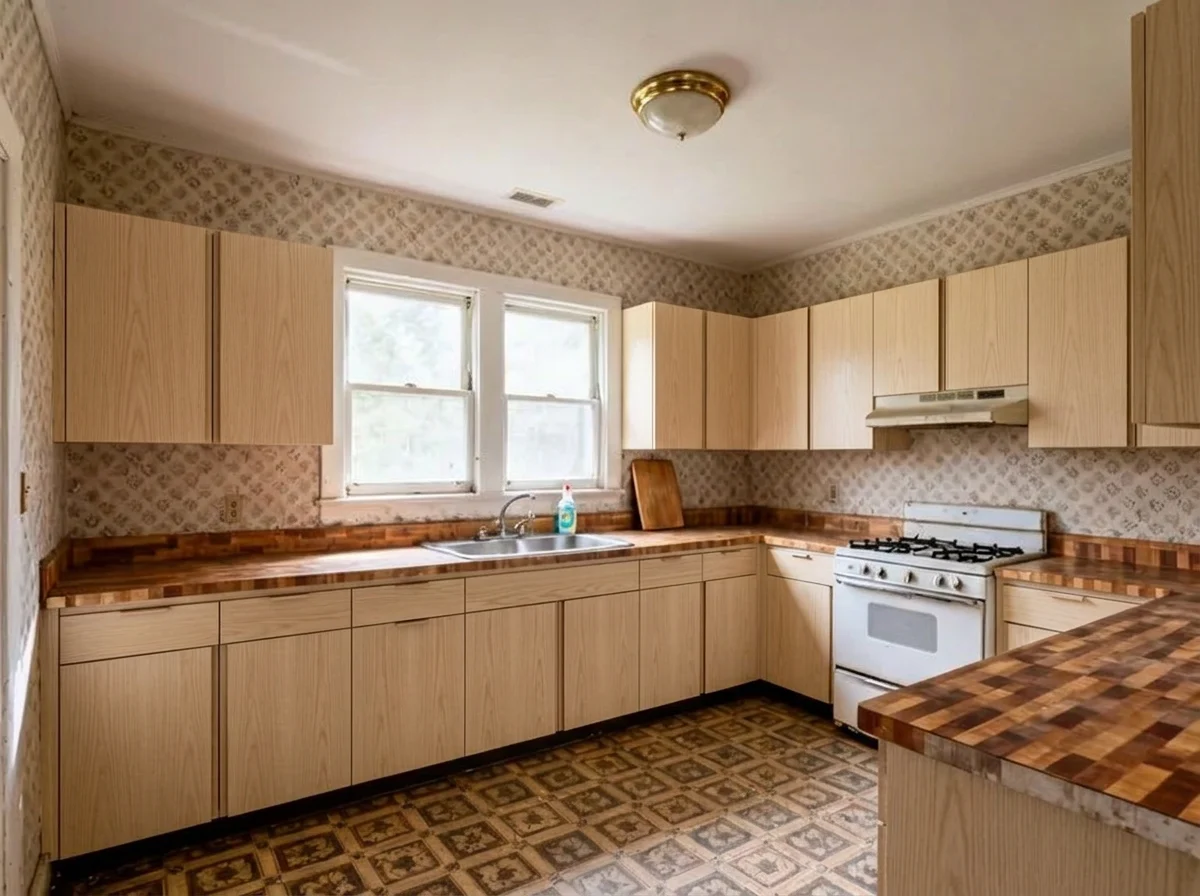
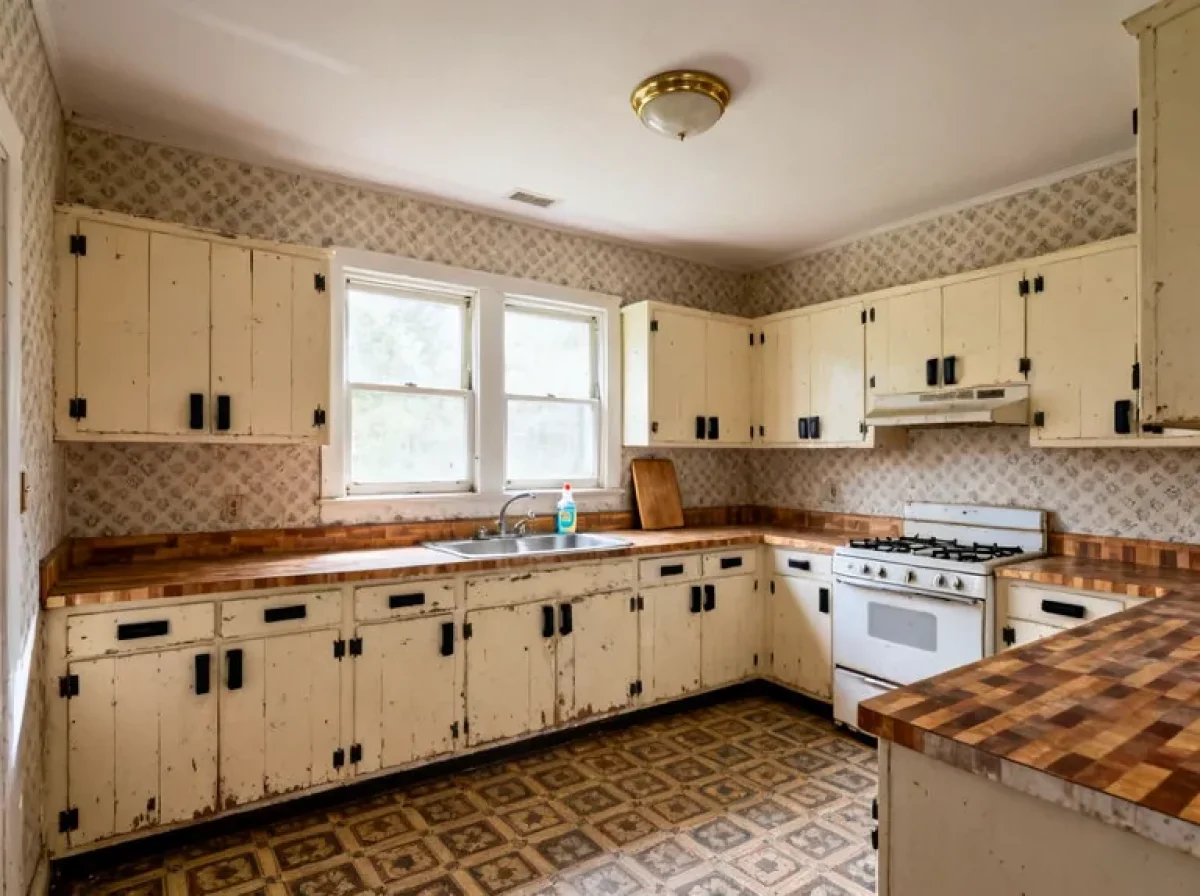
Change the door style, keep the kitchen
One door in a catalogue tells you almost nothing. Thirty of them across your own run, in your own light, is a different kitchen. This page explains what Cabinet Front Redesign does. To see it on your kitchen, upload a photo on the home page.
How it works on your own kitchen
Upload a photo of your kitchen and choose the door style you are considering.
The fronts change shape, and take the finish of the front you picked. The boxes, the layout and the counters do not move.
Opens the tool on the home page. Bring one photo of your kitchen.
The door is most of what you see
Stand in a kitchen and look at it honestly. Most of what is in front of you is cabinet doors, in a single repeating shape, twenty or thirty times over.
Which means the door profile does more to set the character of the room than the color does, and it is the change people are least able to picture. A shaker door and a flat door look almost the same in a catalogue photograph of one door. Across a whole run, in your light, they are two different kitchens.
This puts the profile you are considering onto the run you already own.
Refacing, in a picture
What this shows is what refacing gives you.
Refacing keeps the cabinet boxes and replaces the doors and drawer fronts. It costs a fraction of a full replacement, it takes days rather than weeks, and if the boxes are sound it gets you most of the visual change. What it cannot do is fix a layout, add storage, or rescue carcasses that are failing.
So the useful question is not "should I reface", it is "does refacing get me the kitchen I actually want". A picture of your own run with the new profile on it answers that in about a minute, before anyone comes to quote.
The profiles worth comparing
Shaker. A flat recessed panel with a square frame. The most requested door in the category, and forgiving in almost every room.
Flat, or slab. No frame, no panel, nothing. Very quiet across a long run, and unforgiving about the quality of the finish, because there is nowhere for an edge to hide.
Beaded or bead-board. A textured panel. Warmer, busier, and it dates faster than the other two.
Glass fronted, on some uppers. Depth in a flat wall, at the cost of having to keep the inside of those cabinets tidy forever.
Run them one at a time on the same photo and put the results next to each other. Two profiles in one generation tells you nothing, because you cannot tell which one you are reacting to.
Shape first, color second
There is a right order here and it saves you work.
Settle the door profile first, then test colors on the shape you chose. Do it the other way round and every color has to be tested twice, because a color that reads as calm on a flat door reads as busy on a beaded one.
The profile is also the more expensive decision and the harder one to change your mind about. Paint can be redone in a weekend. Doors cannot.
Photographing the run
- Get a full run of units in the frame, uppers and lowers together.
- Daylight. The shadow line along a panel edge is exactly what you are trying to judge, and a ceiling bulb flattens it.
- Straight on rather than at a sharp angle, so the panel proportions are readable.
- Do not tidy too hard. You are judging the doors, and the counter can stay as it is.
One room, three door styles
These are demonstration kitchens, not customer photos. Each starting room was generated, and every result below is the real Cabinet Front Redesign output run on it, with nothing retouched afterwards.
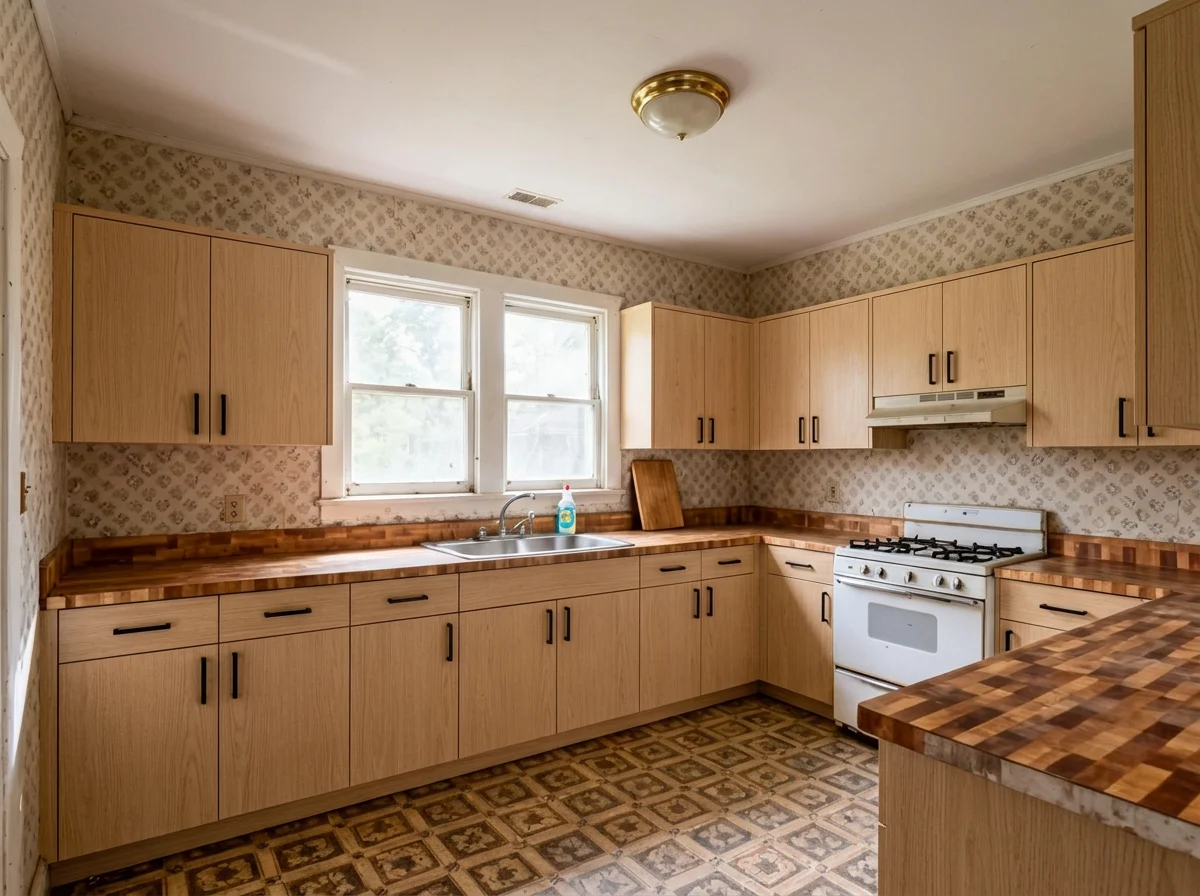
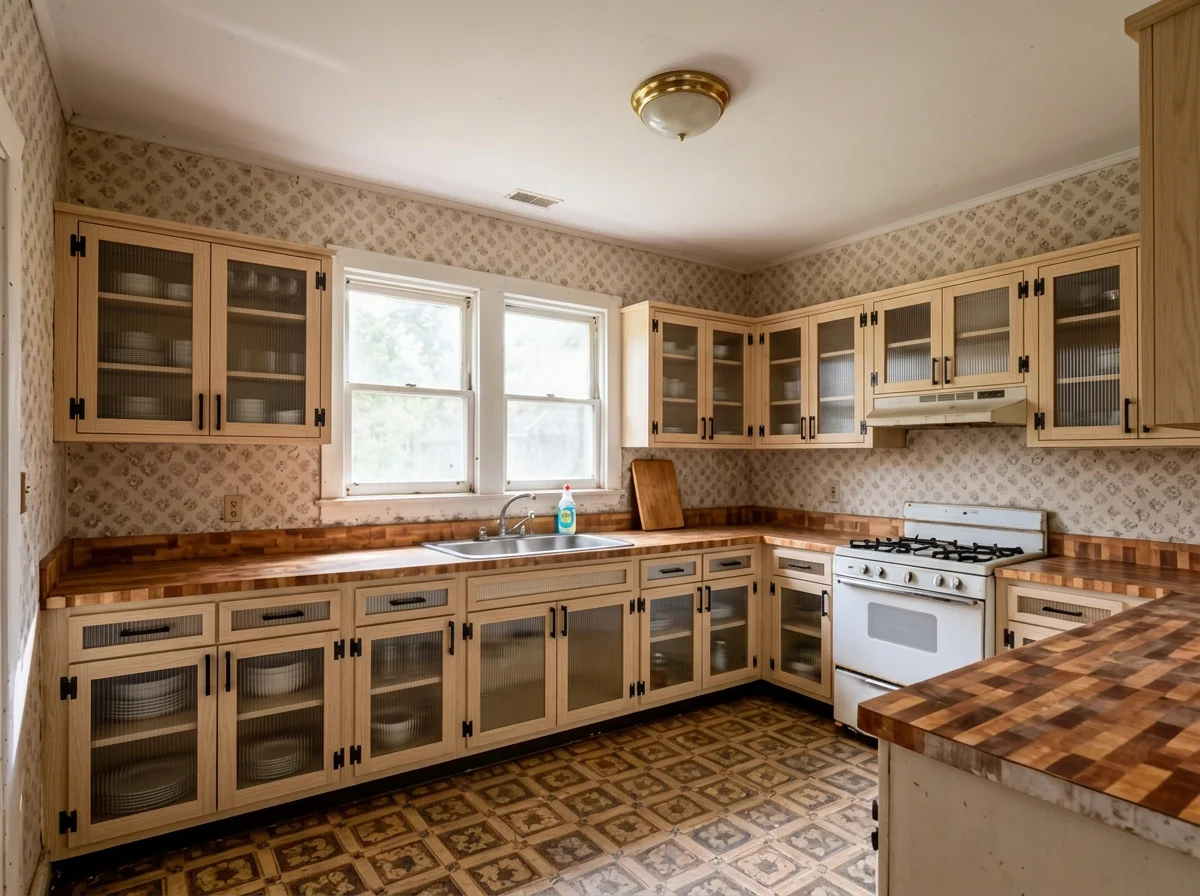
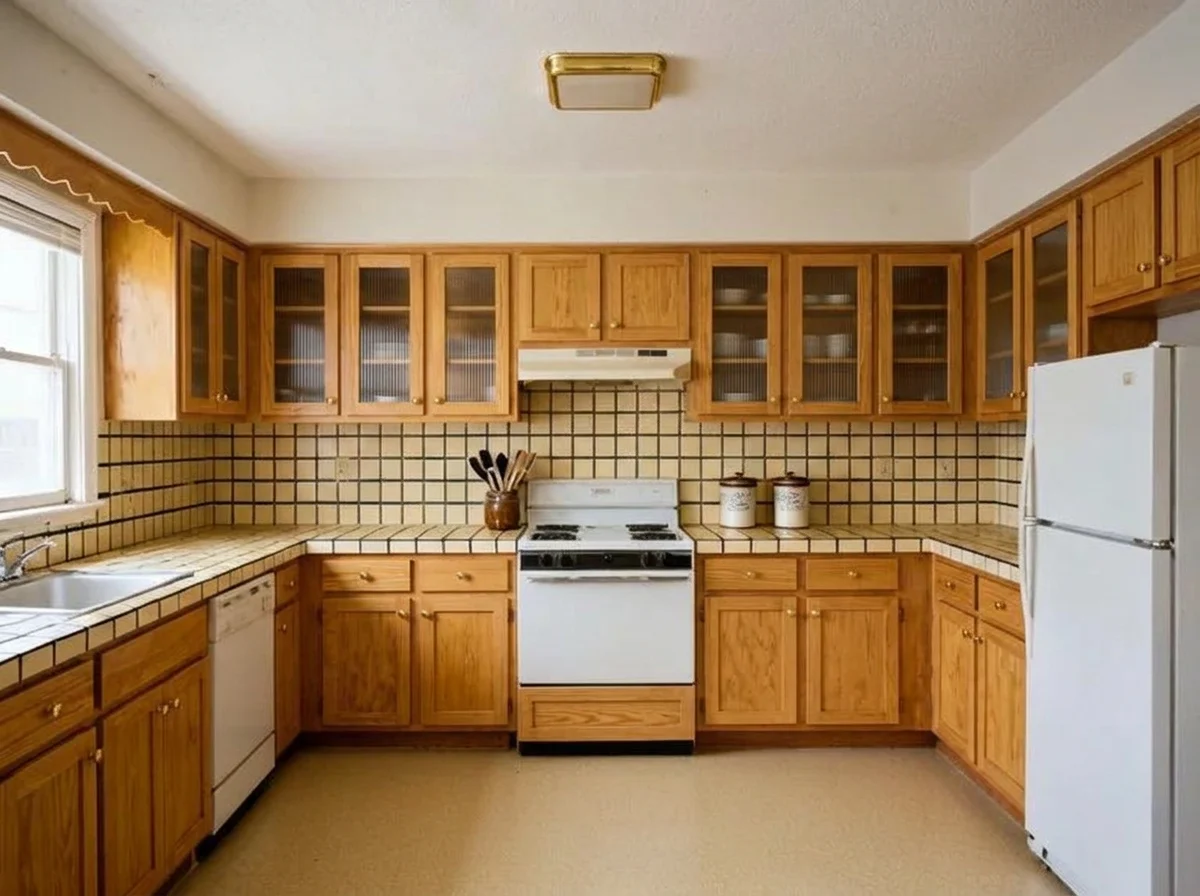
Settle the door shape before the color. Do it the other way round and every color has to be tested twice.
Questions people ask
Is this the same as refacing?
It is a picture of what refacing would give you. Refacing keeps the boxes and replaces the doors and drawer fronts, which is far cheaper than a full replacement and is exactly the change this shows. Use it to decide whether refacing gets you what you actually want before you get quotes for it.
Should I change the door style or the color?
Test them separately, in that order. The door profile is the more expensive change and the harder one to undo, so settle it first, then try colors on the shape you chose. If you change both at once and dislike the result, you will not know which one to blame. One thing to expect: the fronts here come with a finish, because the reference is a photograph of a real door. That is why the slider at the top goes from chipped cream paint to bare oak. Settle the shape on it, then take that shape to Cabinet Painter and try the color on its own.
Does the handle change too?
Usually yes, because the handle is part of the door style. A handleless slab front comes back handleless, as it does in the example above the FAQ, where the old black knobs go with the old doors. If you want to keep a specific handle, or try a different one on the shape you settled on, use Change Handles afterwards.
Which plan includes it?
Every paid plan. Every plan comes with 30 days money back and one-click cancellation, and failed generations never cost you credits.
What to look at next
Cabinet Painter
Once the door shape is settled, test colors on it. Doing it the other way round means testing every color twice.
See Inside Cabinets
The other half of a cabinet decision: what is behind the door you just changed.
Redesign
If the whole room is changing, start there and come back to the fronts.
See the profile on your own run of units
Shaker and flat look nearly identical on one door and completely different across a wall of them. Upload one photo and look at the whole run.
One photo. About a minute. Your room, not this one.