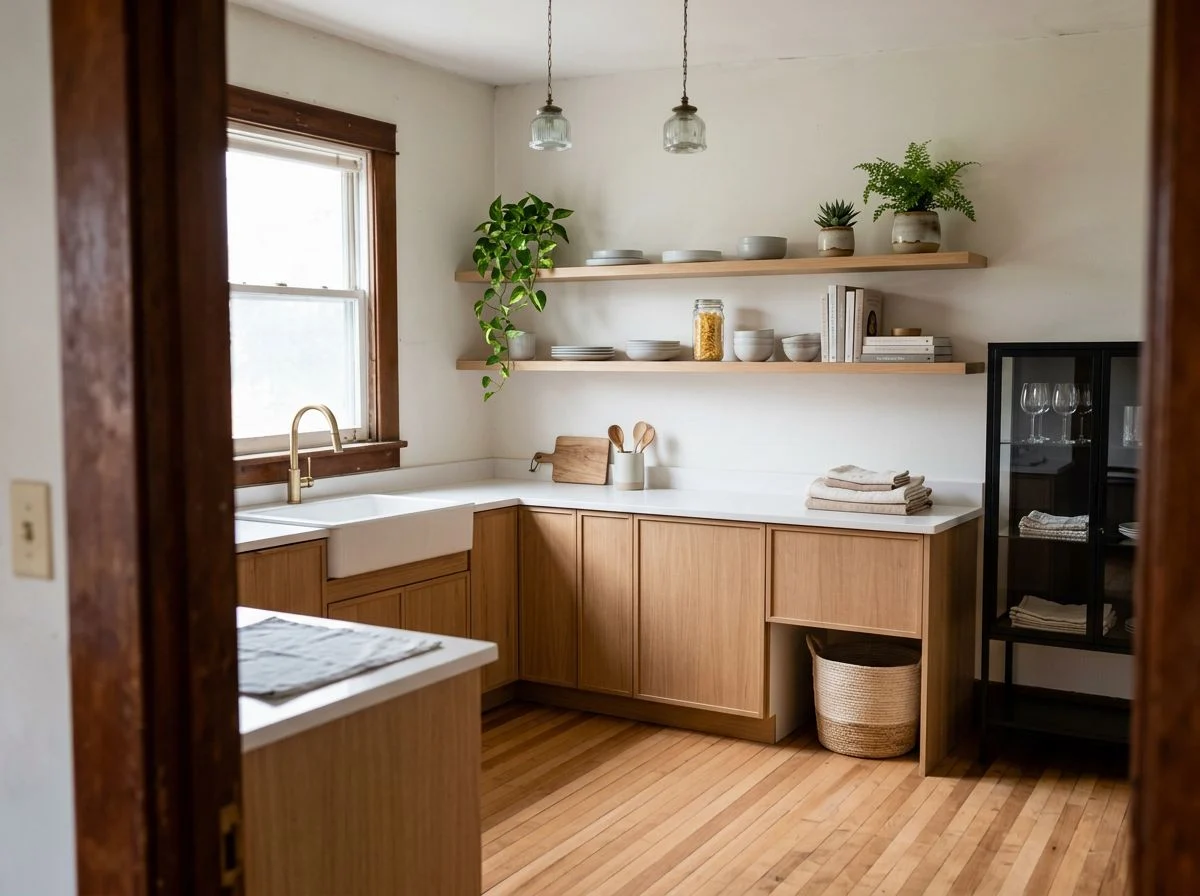
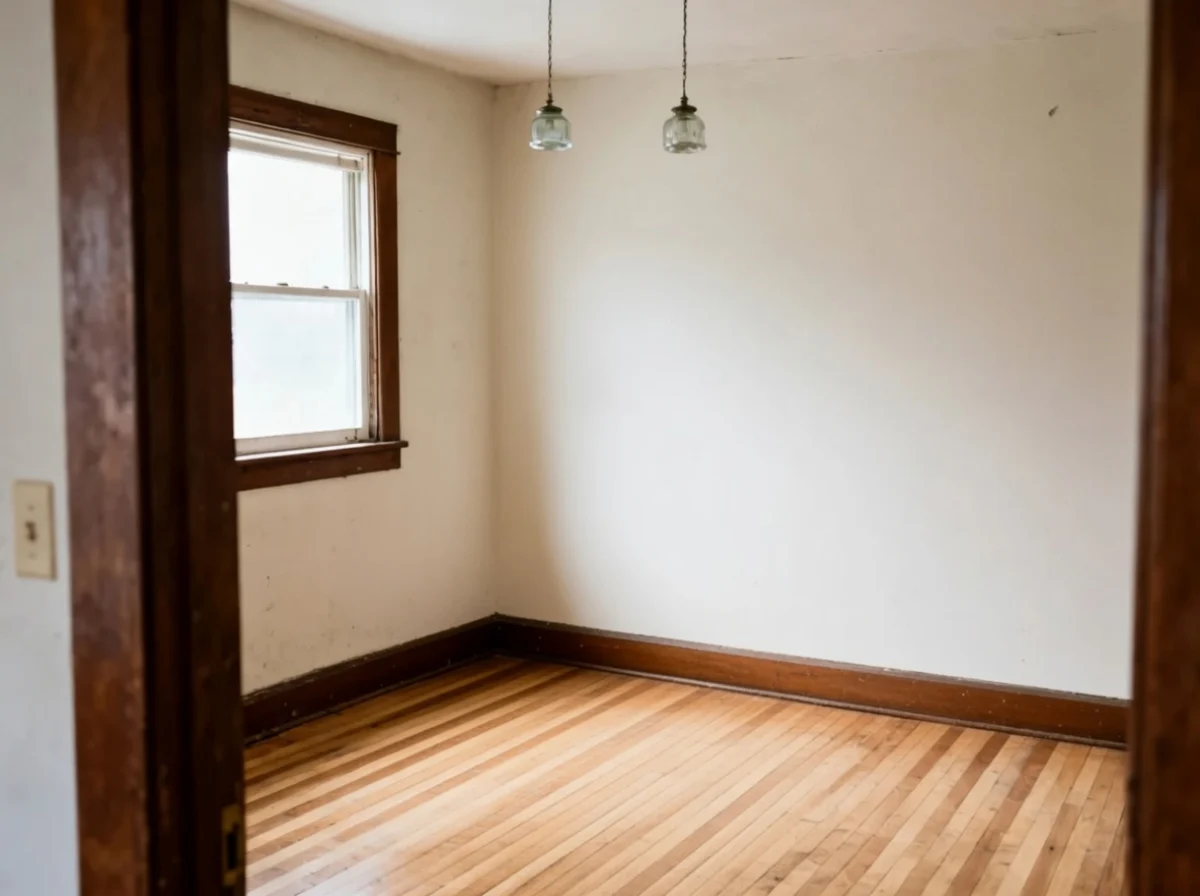
Furnish an empty kitchen without moving anything into it
An empty kitchen reads as small and cold, and buyers are bad at furnishing a room in their heads. This page explains what Virtual Staging does. To stage the room you are listing, upload a photo on the home page.
How it works on your own kitchen
Photograph the empty kitchen and pick the style the listing needs.
Furniture, decor and dressing appear. The room itself stays where it is.
Opens the tool on the home page. Bring one photo of your kitchen.
An empty kitchen is a hard photograph to sell
Buyers are bad at furnishing a room in their heads. This is not a criticism of buyers, it is just true, and every agent has watched it happen: an empty room reads as small, cold and unfinished, and the same room with a table in it reads as a place somebody could live.
Staging solves that, and staging is expensive. Physical staging runs into the thousands for a property. Commissioned virtual staging is priced per image with a turnaround measured in days, which is fine when the listing goes live next week and useless when it goes live tomorrow.
This does the same job from one photograph, in about a minute, on the room that is actually for sale.
What it changes and what it does not
It furnishes the room. Furniture, decor, the dressing that makes a space read as lived in.
It does not move a wall, widen the room, add a window, or step the camera backwards. Those are the four things that make a staged photo a complaint at the front door, and they are the four things the tool is built not to do. What the buyer sees online is the room they will walk into.
The rules that keep staging honest
Scale it to the room. The single tell of bad staging is furniture that is subtly too small for the space it sits in, because it makes the room look bigger than it is. A viewer cannot say why the photo felt wrong, but they know when they arrive.
Do not fill it. A room staged to the edges promises storage and space the room does not have. Fewer pieces, correctly sized, sells better than a full room.
Label it. Several markets and portals require virtually staged images to be disclosed, and rules differ by where you list, so check what applies to you. Label it anyway. A buyer who feels tricked is not a buyer.
Stage the room, not the fantasy. If the kitchen is dated, a redesign is a different and more honest thing to publish, clearly presented as a possibility rather than as the current state.
Getting the photo right
- Empty the room first if you can. If you cannot, run Empty the Room on the photo and stage the result.
- Shoot in daylight, from a corner, with the camera at chest height rather than at your eye level.
- Get the full floor plane in the frame. Furniture has to sit on a floor, and a photo that crops the floor gives it nowhere to stand.
- Keep the camera level. A tilted camera is what makes staged furniture look pasted on.
- Shoot the same room at the same angle for every version, so a buyer comparing two listings is comparing the same room.
Who this is for
Agents listing a property with an empty or half-empty kitchen. Owners preparing to sell. Anyone who needs a listing photo this afternoon and cannot wait two days for a commissioned image.
The tool is on the Studio plan, along with floor plans, moodboard matching and turning a sketch into a kitchen.
One empty room, four listings
These are demonstration kitchens, not customer photos. Each starting room was generated, and every result below is the real Virtual Staging output run on it, with nothing retouched afterwards.
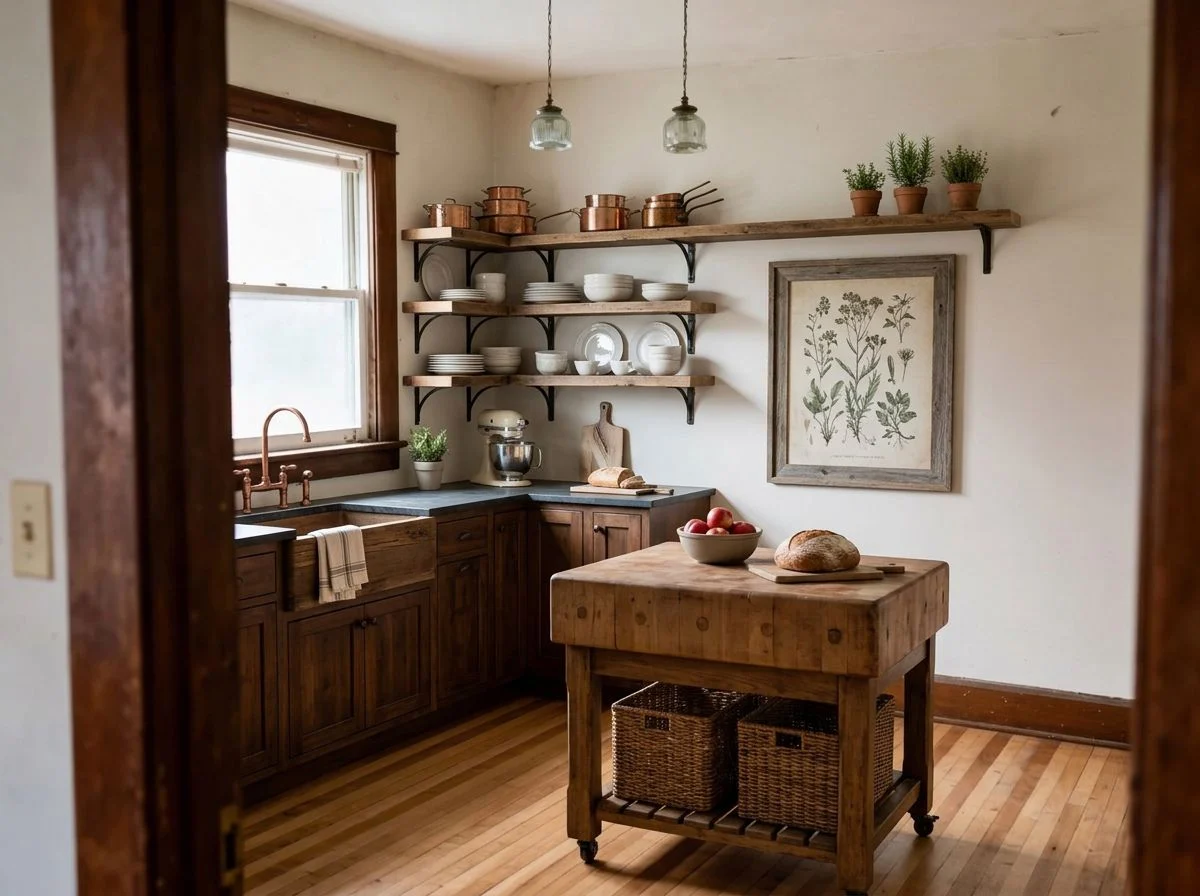
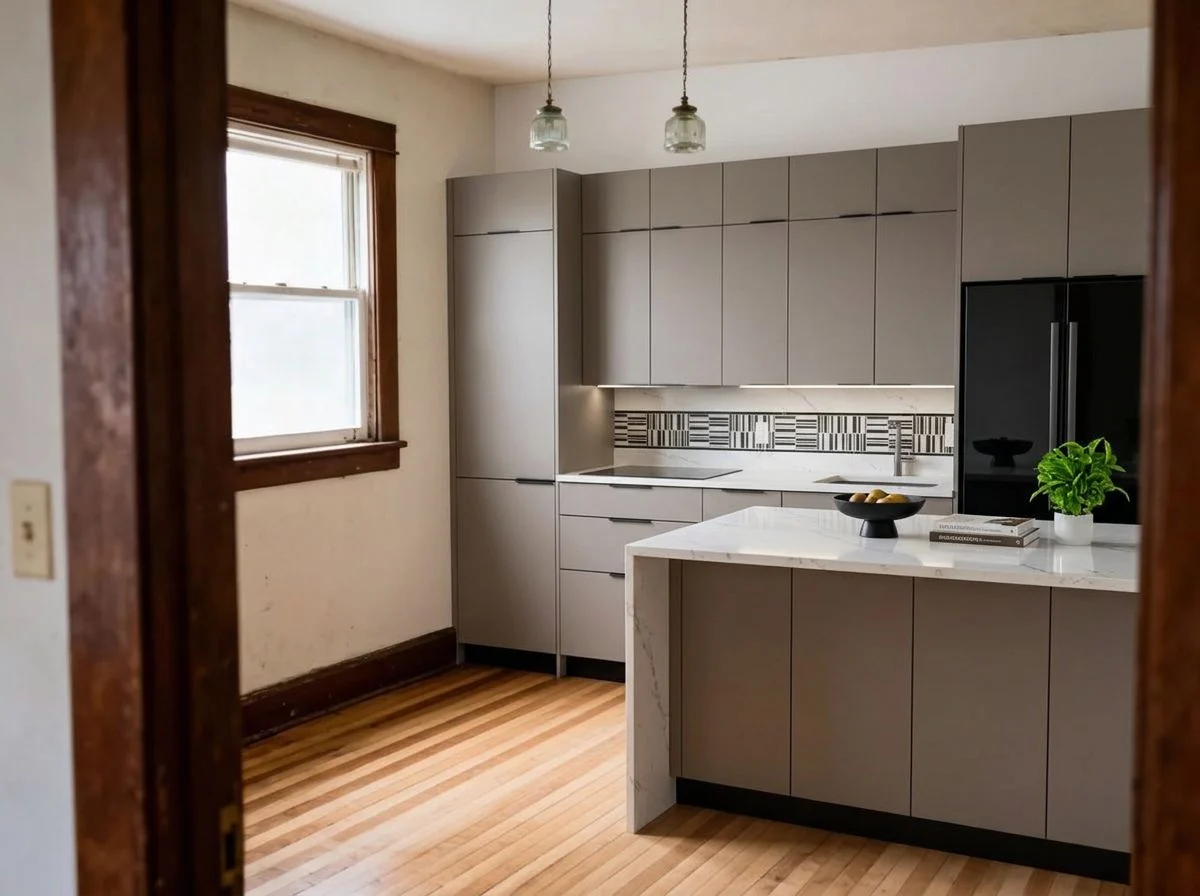
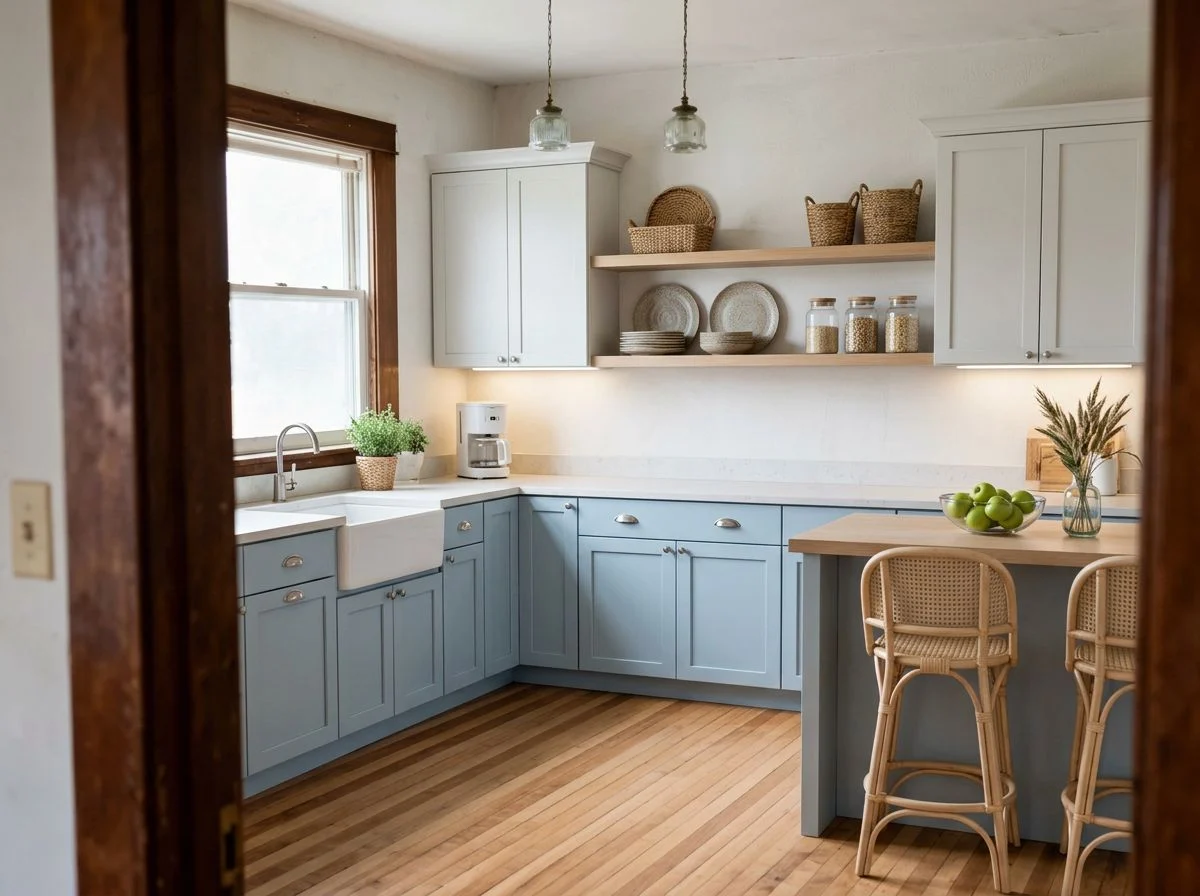
A stock photo of a furnished kitchen sells somebody else’s house.
Questions people ask
How does this compare with commissioning virtual staging?
Traditional virtual staging is commonly priced per image with a turnaround measured in days. This is per generation and takes about a minute, and you can try several styles rather than commissioning one and living with it. What a commissioned artist gives you that this does not is a human checking the result before it reaches you, which is your job here.
Will it look fake to a buyer?
That is the right thing to worry about, because staging that reads as fake works against the listing. Two rules help. Keep the furniture at a scale that matches the room, and do not stage a room so full that a viewer arriving in person feels misled. If the picture promises something the visit cannot deliver, it has cost you the viewing.
Do I have to disclose that a photo is virtually staged?
Rules vary by market and by portal, and several require a label on the image. Check what applies where you list. We would label it regardless: a buyer who feels tricked at the front door is not a buyer any more.
Does it work on a room that is not completely empty?
It is built for an empty room. If the kitchen still has things in it, run Empty the Room first and stage the result.
Which plan includes it?
Virtual Staging is on the Studio plan, along with floor plans, moodboard matching and turning a sketch into a kitchen.
Stage the room in the listing
Upload one photo of the empty kitchen you are selling and furnish that room, at the right scale, with the walls where they are.
One photo. About a minute. Your room, not this one.