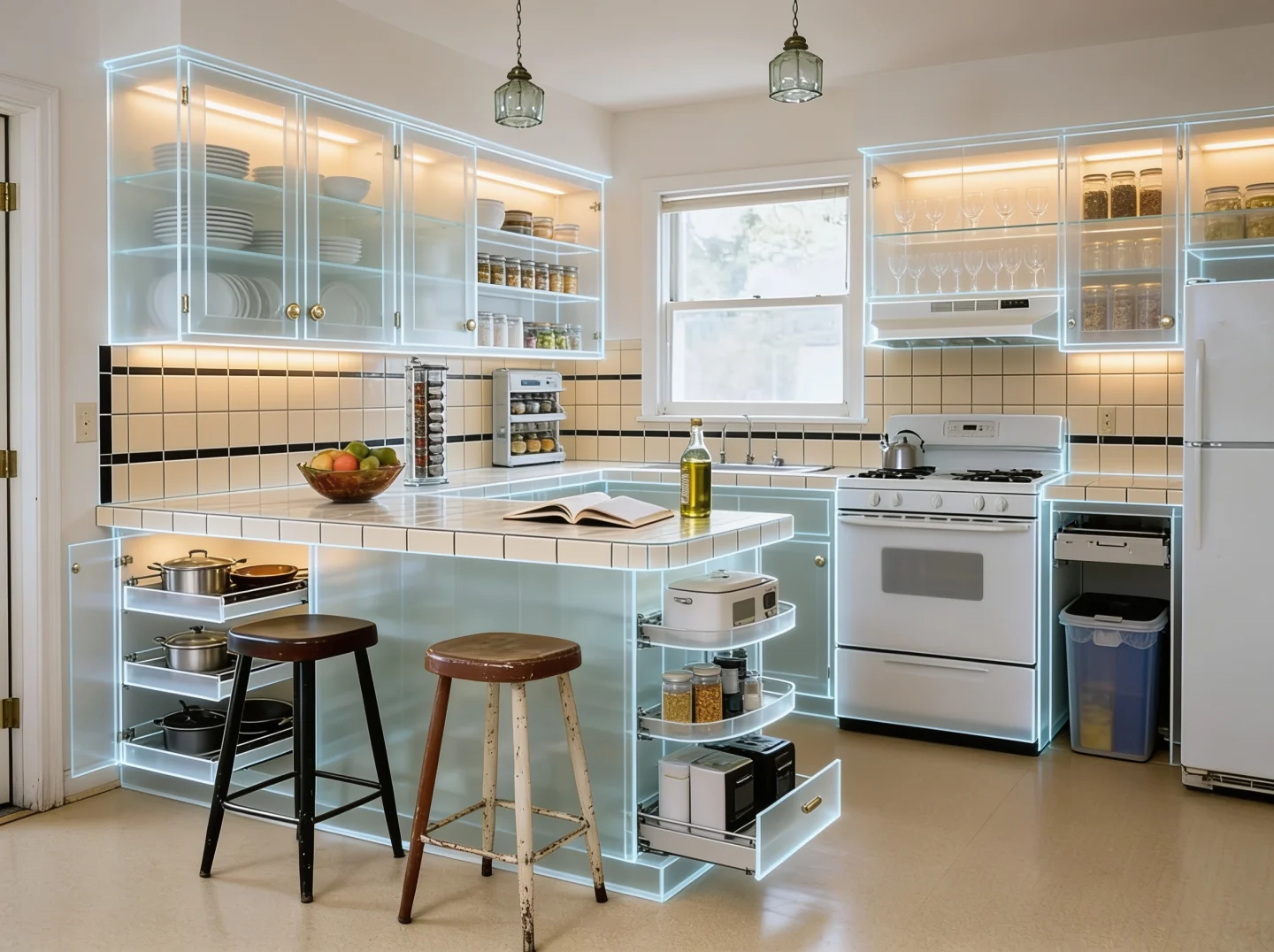
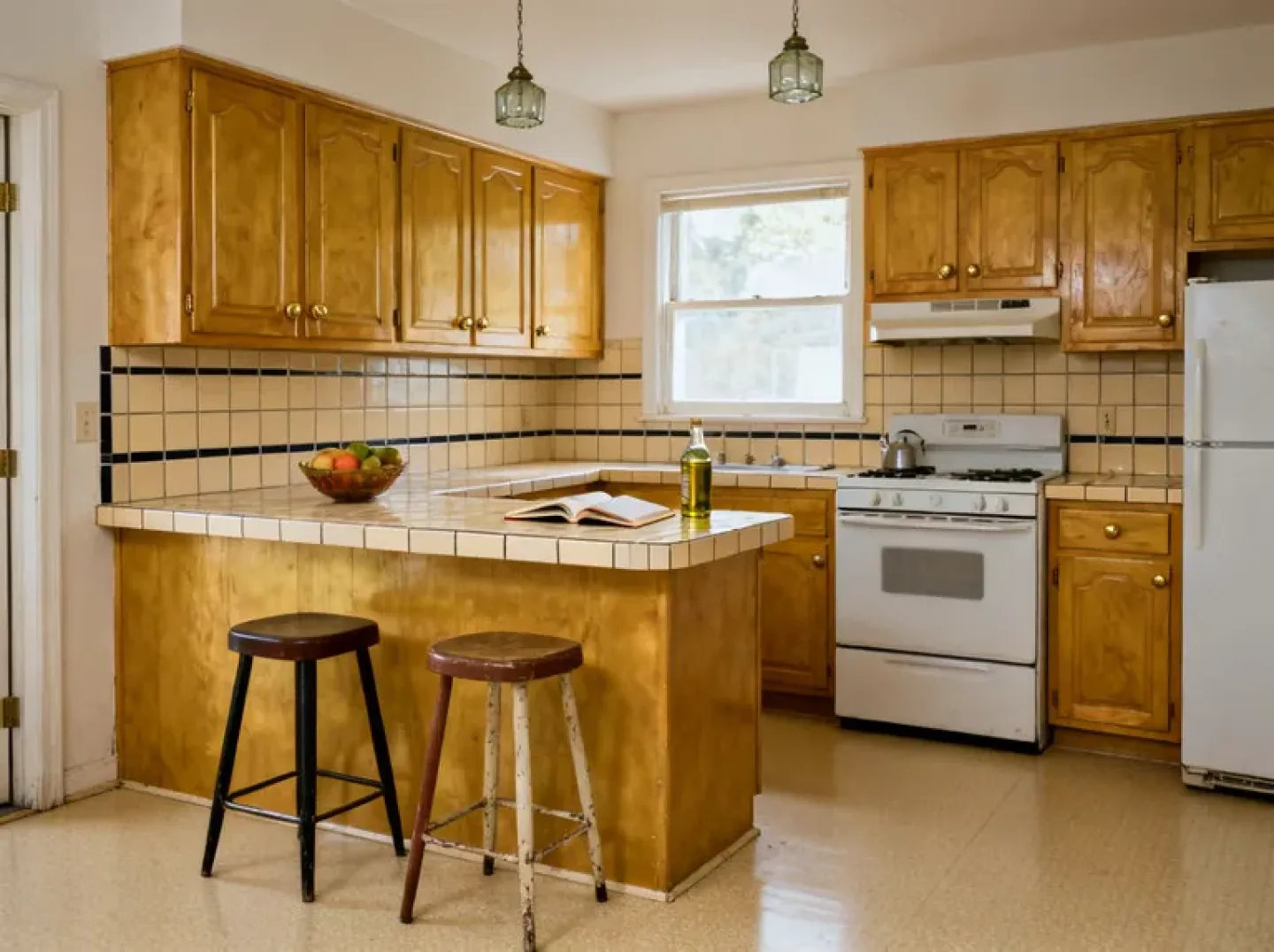
See what is inside the cabinets before anyone builds them
Every photograph of a kitchen has the doors shut, so the one thing you live with every day is the one thing you never get to see. This page explains what See Inside Cabinets does. To open your own doors, upload a photo on the home page.
How it works on your own kitchen
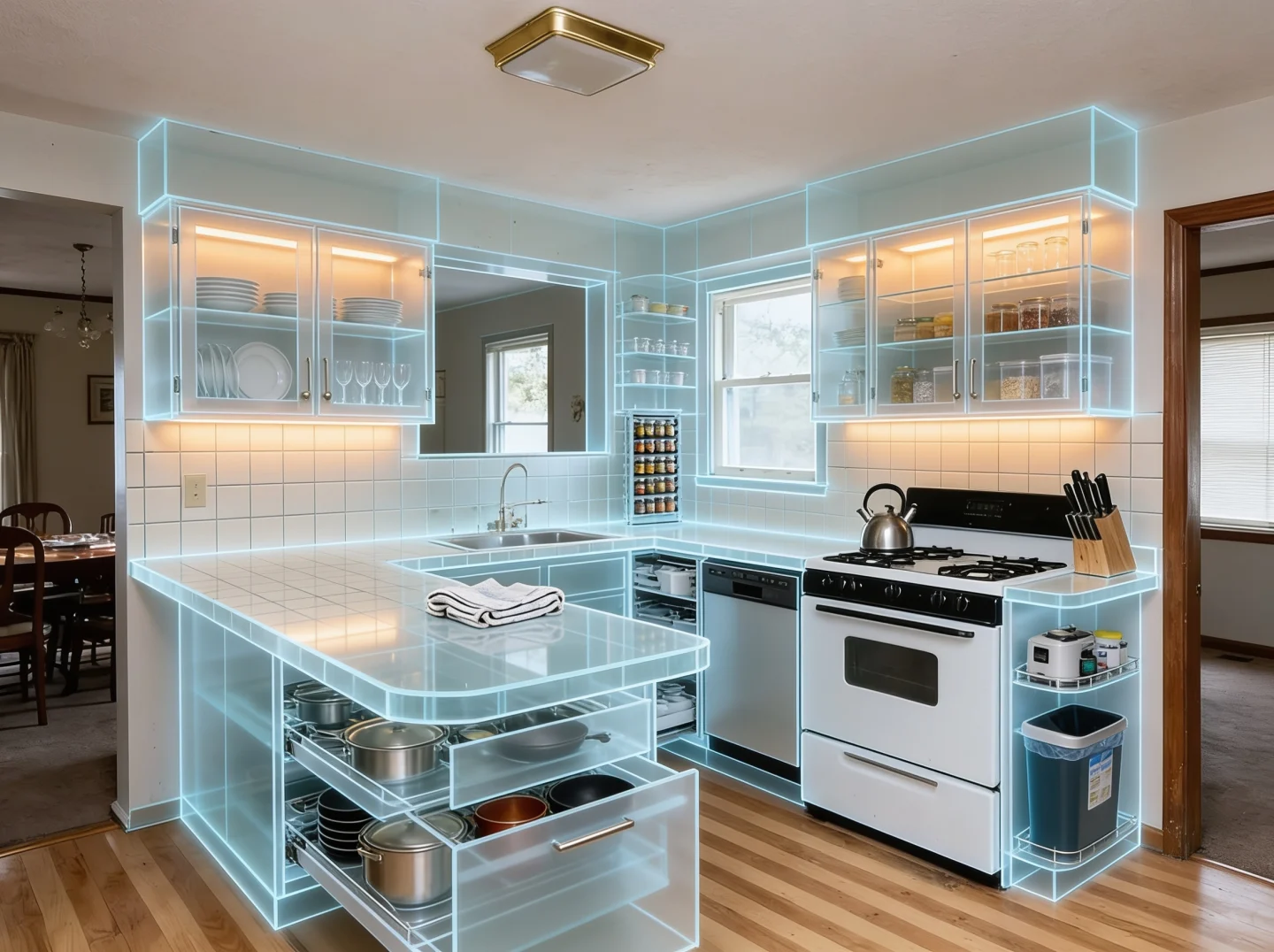
Upload a photo of your kitchen and the cabinet fronts become frosted panels.
The shelves, the drawer stacks and the storage appear behind them. The layout does not move.
Opens the tool on the home page. Bring one photo of your kitchen.
The one decision nobody photographs
Every kitchen photograph you have ever looked at has the doors shut.
Showroom displays, magazine spreads, the folder of images you have been collecting: all of them show the outside of the cabinets. None of them show how the space behind those doors is divided. And the division is the thing you will notice every single day, long after you have stopped noticing the color.
That is what this tool opens up. The doors turn frosted and the storage becomes visible: shelves, drawer stacks, what sits where, how the run is actually broken up.
What it is honestly useful for
Checking that the run makes sense. Ten identical cupboards is not storage, it is ten identical cupboards. When you can see the whole run open at once, the parts that repeat pointlessly become obvious.
Seeing the trade-off between doors and drawers. A base unit with a door and a shelf holds roughly what a drawer stack holds, and is far worse to use. This is easy to agree with in the abstract and hard to picture in your own kitchen until you see both.
Settling an argument about a pantry. Tall storage takes floor space you can only spend once. Looking at what it holds, in your room, is a better basis for that decision than a preference.
Finding the dead corner. Every kitchen has one. It is easier to plan around when you can see it.
What it is not
It is not a measurement, and you should not treat it as one.
If you need to know whether a specific pot fits a specific drawer, get a tape measure and the manufacturer's specification. This tool produces a picture, not a dimension, and a picture that looks right is not evidence that something fits.
It is also not a cabinet planner. It will not tell you which units to order or how many. What it does is let you look at the arrangement you are considering as a whole, in your own room, before you commit the cabinet budget to it.
How to get a result worth reading
- Stand back far enough to get a full run of units in the frame. One cupboard tells you nothing about how the run is divided.
- Shoot in daylight. Warm bulbs push everything yellow, and the interiors are the part you are trying to see.
- Shoot straight on where you can, rather than at a sharp angle.
- Run it on the kitchen you are considering, not only on the one you have. Redesign the room first, then x-ray the result.
Where this fits in the order of decisions
Storage is a decision you make once and live with for fifteen years, and it is the one most often left until the cabinet order is being placed.
Move it earlier. Decide how the run is divided before you decide what color the doors are, because the color is cheap to change and the arrangement is not. Then bring the doors back and settle the finish on a run you already know works.
That is the whole argument for looking inside first.
Four kitchens with the doors opened
These are demonstration kitchens, not customer photos. Each starting room was generated, and every result below is the real See Inside Cabinets output run on it, with nothing retouched afterwards.
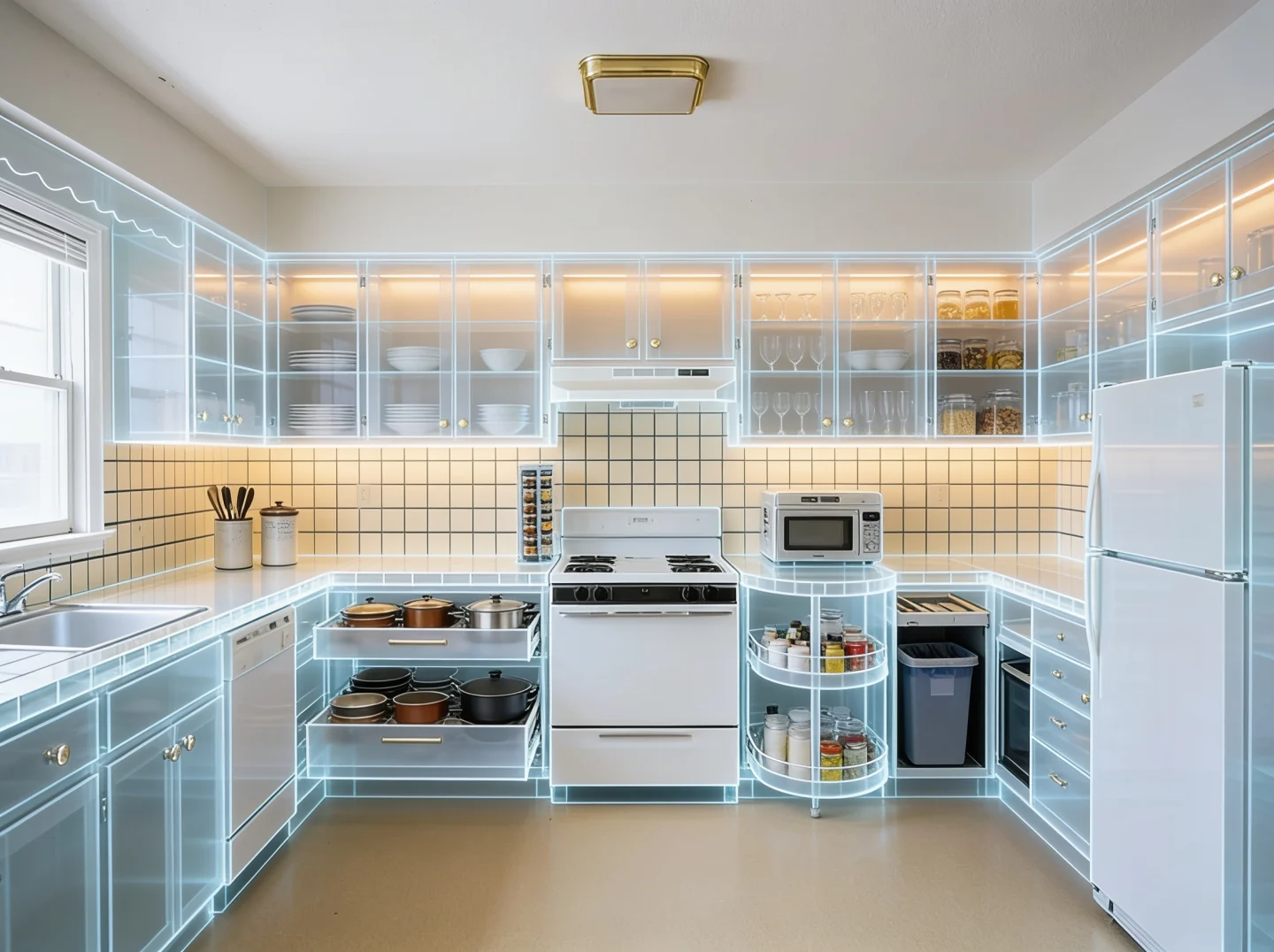
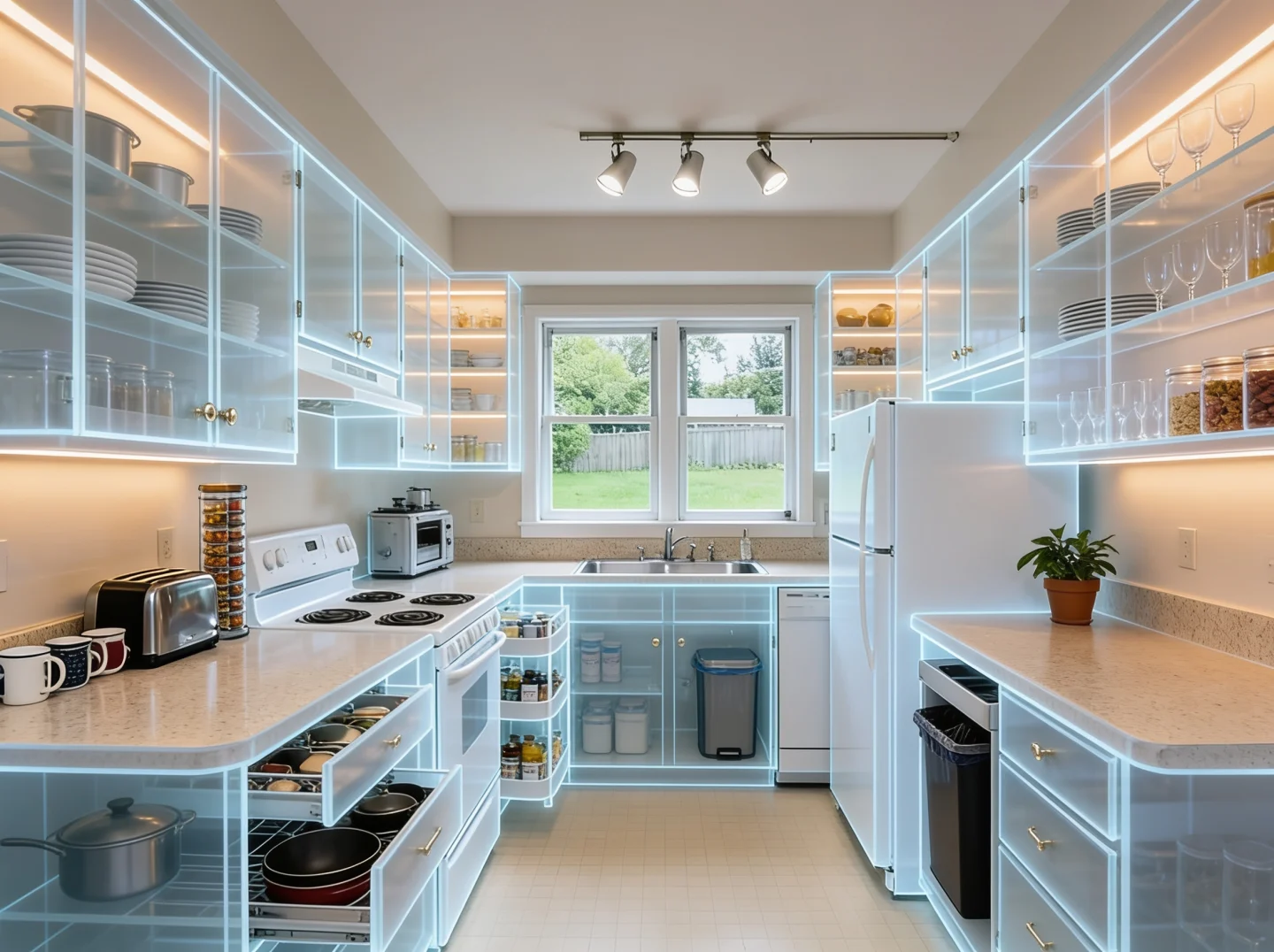
Storage is the decision people notice they got wrong six months after the kitchen goes in.
Questions people ask
What is this actually for?
Storage is the thing people notice they got wrong six months after the kitchen is in, and it is invisible in every photograph and every showroom display, because the doors are shut. This opens them. You are checking whether the run you are about to pay for is divided the way you cook.
Is this a measurement of my storage?
No, and do not treat it as one. It is a picture of how the space behind your doors is arranged. If you need to know whether a specific pan fits a specific drawer, measure the drawer. This answers the question a tape measure cannot: whether the arrangement makes sense once you can see all of it at once.
Does it change my kitchen?
It is meant to change only the doors, and only to make them see-through. The layout, the walls and the camera angle hold. What to watch is what gets added. Three of the four kitchens on this page came back with a small appliance standing on a counter the photograph left bare, and the slider at the top is one of the three: a spice carousel and a small countertop unit appear on it that were never in the room. The fourth put nothing on a worktop, but it stood a rack of spice jars in an empty corner and fitted a dishwasher into a base unit that had a wood door on it. Every one of the four says what it added, the three in the gallery in their captions and the slider right here. Read the picture for the storage behind the doors, which is what you came for, and do not read anything into a gadget that appears on a worktop.
Which plan includes it?
Every paid plan. There is no free tier, every plan comes with 30 days money back and one-click cancellation, and failed generations never cost you credits.
What to look at next
Open every door at once
You cannot judge storage from a photograph of closed doors. Upload one photo of your kitchen and look straight through it.
One photo. About a minute. Your room, not this one.