Dark metal shelving
Open shelves on black steel frames, in place of some upper cabinets. They hold the dishes and cookware you use every day. Everything on them is on display, so keep the load tidy.
Raw, urban and edgy. Industrial kitchens embrace exposed elements and utilitarian style.
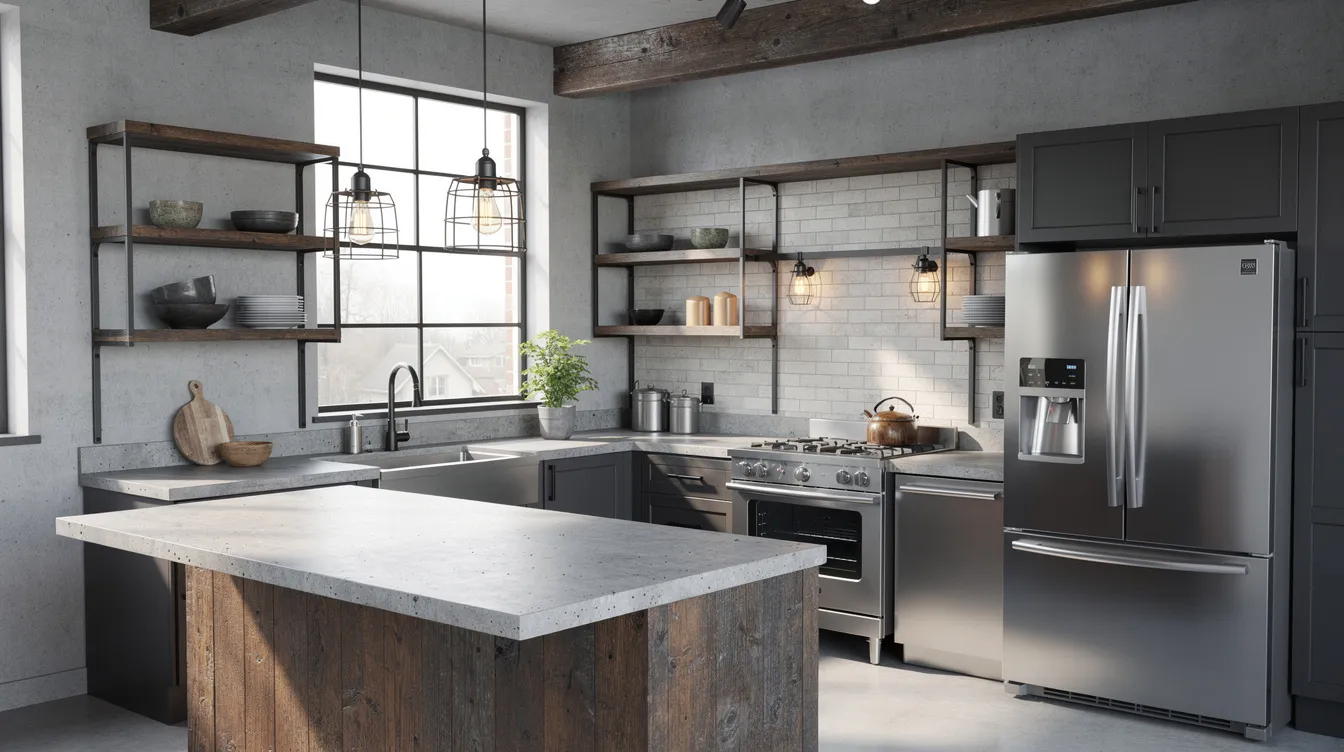
Industrial kitchen design draws inspiration from warehouses and factories. It features exposed brick, metal fixtures, open shelving, and a mix of raw materials. The style celebrates imperfection and creates a bold, urban aesthetic.
Industrial depends on contrast. Dark metal, pale walls and warm wood need each other, and a kitchen with only the dark half of that list feels like a cellar rather than a loft. Judge it with your own window and ceiling height before you buy anything heavy. See your own kitchen in it first.
Industrial is not the same as dark or gray. A black kitchen with glossy doors and a quartz counter is a modern kitchen in a dark color. These six things are what people are naming when they say industrial.
Concrete, brick, steel and unfinished wood are shown as they are, not covered or painted to look like something else. The style needs surfaces that look made rather than decorated.
Black steel frames, pipe-style rails and stainless steel that looks like it came from a working kitchen. A few thin dark metal lines do more for the look than a lot of heavy metal.
Rough brick next to smooth steel, cool concrete next to warm wood. The contrast between three or four materials is the style. One material everywhere is not.
Steel shelving, open racks and a rail for pans. The tools are part of the room, so they have to be tidy enough to live on show.
Exposed-bulb pendants, metal dome shades, rail or track lights. The fixture should look like it is there to light a workspace, not to decorate it.
Uneven brick, a patina on the metal, a worn wood top. Industrial treats wear as part of the look, which suits people who do not want to worry about every mark.
Get three of these right and the room reads industrial. The other three add detail.
Open shelves on black steel frames, in place of some upper cabinets. They hold the dishes and cookware you use every day. Everything on them is on display, so keep the load tidy.
A soft gray surface with a slightly uneven tone. Poured concrete needs sealing and can show fine cracks over time. A concrete-look slab gives the same look with less upkeep.
A row of bare-bulb or simple dome pendants over the island or sink. Hang them in an even line and keep the cords and rods dark and straight.
A plain stainless fridge, a steel hood, or a commercial-style range. A brushed finish hides fingerprints better than a mirror-polished one.
An island top, a few shelf boards or a bench in old wood. One warm surface keeps the metal and concrete from feeling cold.
Faucet, pulls, light fixtures and shelf brackets in the same matte black. One repeated finish makes the small metal parts look like a set.
People say "industrial" and mean several different rooms. Decide which one you mean before you buy a light fixture. Each one has its own page.
Exposed brick softened by warm wood, leather seating and amber light. The friendliest version, and the easiest to live in.
Reclaimed barnwood counters, black pipe shelving and weathered brick. Rougher, with more visible age.
Raw concrete and metal softened by velvet and brass, with crystal lighting against exposed elements.
White shaker cabinets with black steel frames, an apron sink and reclaimed wood shelves. A workshop mixed with a country kitchen.
Industrial runs on a short color list and lets the materials supply the rest. Pick one of these and stop.
Charcoal lowers, steel gray, one brick wall, pale walls elsewhere.
Gray concrete, dark metal and one reclaimed wood surface.
Matte black frames and fixtures against white walls, so the dark lines stay sharp.
One weathered rust tone, used once, with iron and stone gray.
Industrial is built from real materials, so the material and its upkeep matter more here than the color name on the sample.
You do not need a loft or a rebuild. These five changes, in this order, give the most for the least work.
Swap the pendants for simple dome or bare-bulb fixtures in black metal. It is the smallest change that shifts the room the most.
Take the doors off one wall and install steel brackets with wood or steel boards. Screw the brackets into studs or solid masonry, because full shelves of pots are heavy.
A matte charcoal or black on the base cabinets, with light walls above. The contrast between the two is what reads as industrial.
Faucet, pulls and brackets in matte black. It is cheap, and it ties the other changes together.
A reclaimed wood island top, or a wall of brick-look tile. Pick one, and let the rest of the room stay plain.
Dark metal needs light walls or a big window to balance it. A dark kitchen with little daylight feels heavy, not edgy.
Brick, pipe, gears, bulbs and metal stools together look like a theme restaurant. Choose three or four and keep the rest plain.
Metal and concrete alone feel cold. Bring in wood, a leather stool or a warm-white bulb.
Hard surfaces echo. A rug runner or fabric-topped stools soften a room of steel, tile and concrete.
Send one photo. Keep your layout, your windows and your measurements, and change everything else.
Rated 4.8 by the people already using it.